Blue carbon the focus of inaugural 'Adapt for the Future' seminar
Thursday, 30 October, 2025
Share
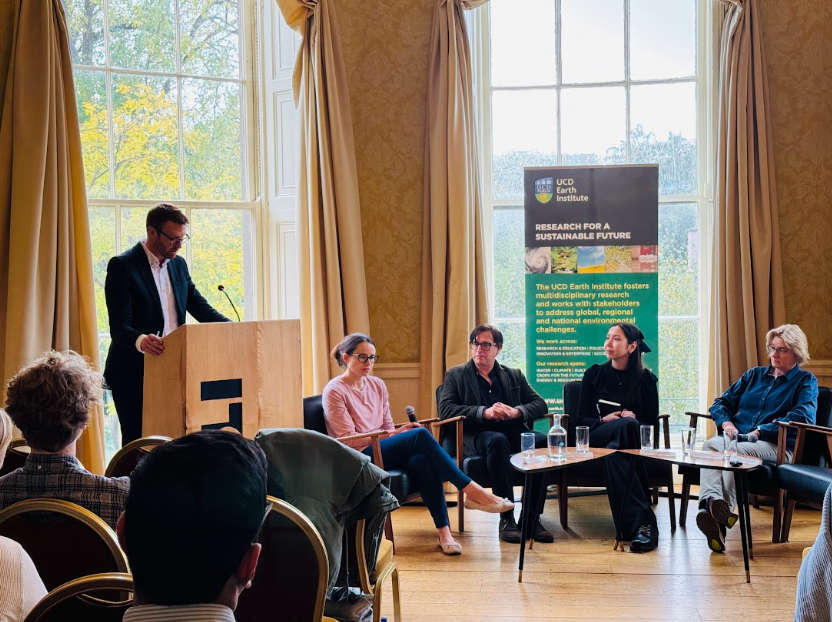
Saltmarshes and seagrasses and their capacity to store carbon was the focus of the first of our new seminar series, Adapt for the Future, which kicked off in the Museum of Literature Ireland earlier this week.
The lunchtime event, Carbon in coastal ecosystems – an Irish perspective, featured presentations on the carbon stocks and sequestration rates of saltmarsh ecosystems; their carbon sources and management, and how Irish seagrass meadows operate as blue carbon systems.
Among the presenters was Climate Fellow Dr Grace Cott from UCD School of Biology and Environmental Science, whose research focuses on measuring the level of carbon storage and greenhouse gas emissions from saltmarshes.
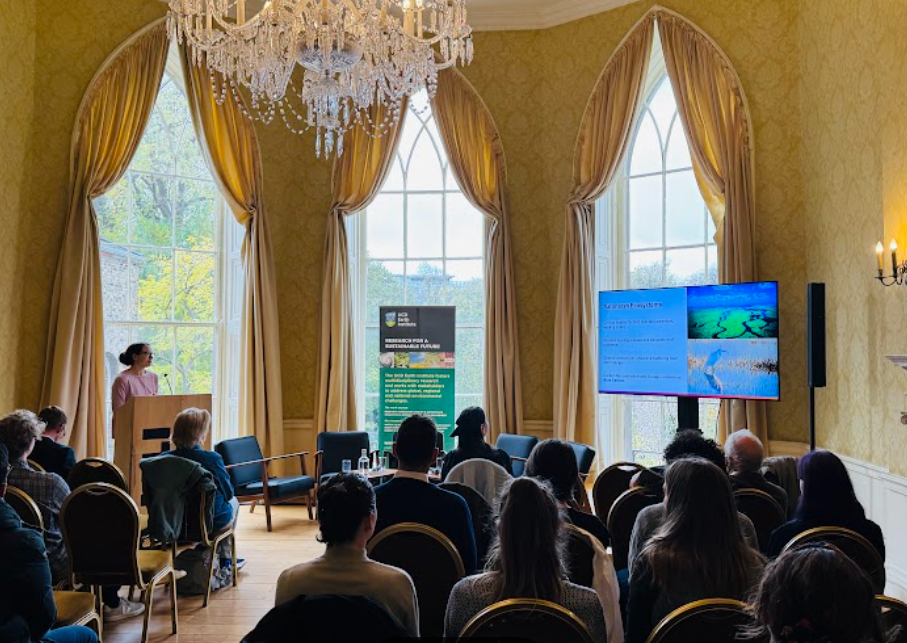 Dr Grace Cott from UCD School of Biology and Environmental Science is a coastal wetland ecologist. Photo: Antonio Soler
These habitats become flooded by the tide, leaving the soils waterlogged and with very little oxygen. The saltmarshes’ vegetation absorbs CO2 from the atmosphere through photosynthesis. This carbon is then used to build organic biomass, with saltmarshes producing a significant amount of organic matter which decays over a long period of time. Importantly, the organic carbon can remain trapped in the waterlogged soil for centuries.
Besides their blue carbon benefits, saltmarshes are a critical habitat for birds such as waterfowl and wading birds, Dr Cott explained. In addition, she said, they provide coastal protection – with their dense vegetation effectively dissipating the wave energy from incoming storms. They can also reduce flooding by slowing and absorbing rainwater coming off the land, and they purify water by acting as filters.
The audience heard that there is around 6,650 hectares of saltmarsh in Ireland across at least 238 sites. These include lagoons, bays, estuaries and fringes.
Dr Cott and her team have been monitoring a saltmarsh in Derrymore, Co. Kerry, to measure the exchange of CO2 between the ecosystem and the atmosphere. Their findings estimate that approximately 3,000kg of carbon per hectare are drawn down every year. Based on this estimate, the national saltmarsh carbon drawdown figure is approximately 0.02 Mt C annually.
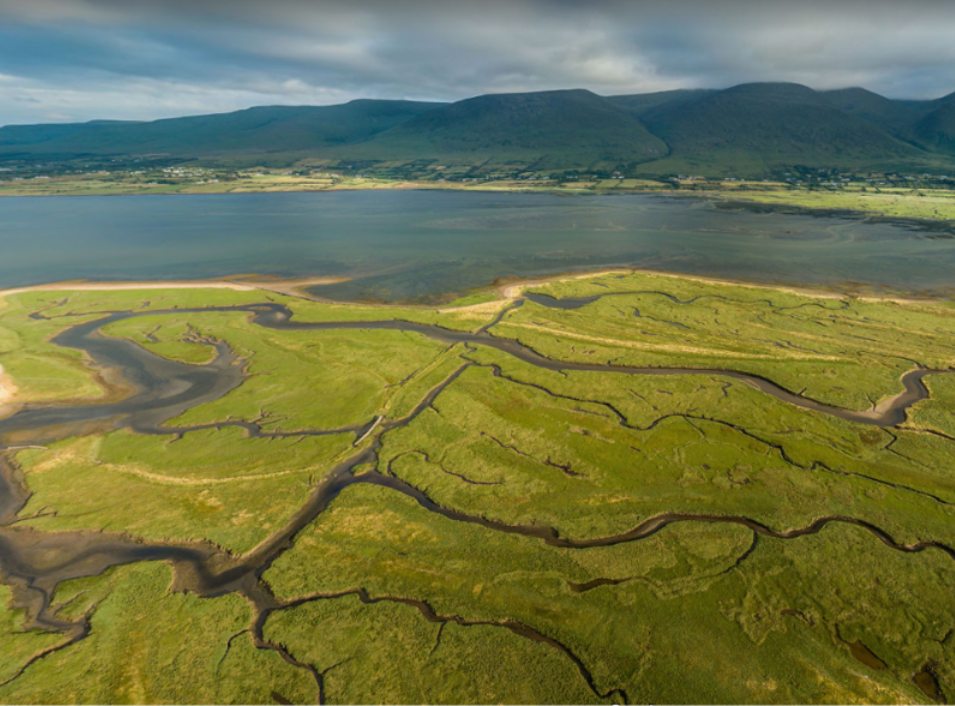 Derrymore saltmarsh, Co. Kerry
In terms of safeguarding, she said that while saltmarshes are protected by the Habitats Directive and the EU Water Framework Directive, threats such as infilling for sporting activities and cattle grazing remain. When these ecosystems are degraded, the sequestered carbon can be released back to the atmosphere and ocean.
Dr Cott also highlighted another project focused on the recreational value of blue carbon ecosystems (BCE). Based on a travel survey, the estimated recreational value of saltmarsh at Bull Island is between €280,000 and €1.7milllion. Aggregating this to a national level, the recreational value of saltmarsh benefits could be up to €8.6 million.
In addition, a public survey found that the majority of respondents would be willing to pay for BCE restoration, with people willing to pay €295 for a seagrass restoration project and €230 to restore a saltmarsh.
In her presentation, Climate Fellow Dr Saule Akhmetkaliyeva, also from UCD School of Biology and Environmental Science, explained that sedimentary carbon is mostly marine and is found in higher quantities in the lower marsh and at the top of the core; that terrestrial carbon levels are higher in the upper-marsh and downcore; that saltmarshes can change in character over time, and that long-term carbon storage depends on connectivity to the marine environment.
She also highlighted how saltmarshes respond to climate change – namely, that higher temperatures and CO2 levels lead to higher biomass and sediment accretion. As these ecosystems have the potential to be resilient in the face of climate change and sea-level rise, they should be further protected and restored.
However, Dr Akhmetkaliyeva warned that only some, not all, saltmarshes can withstand sea-level rise.
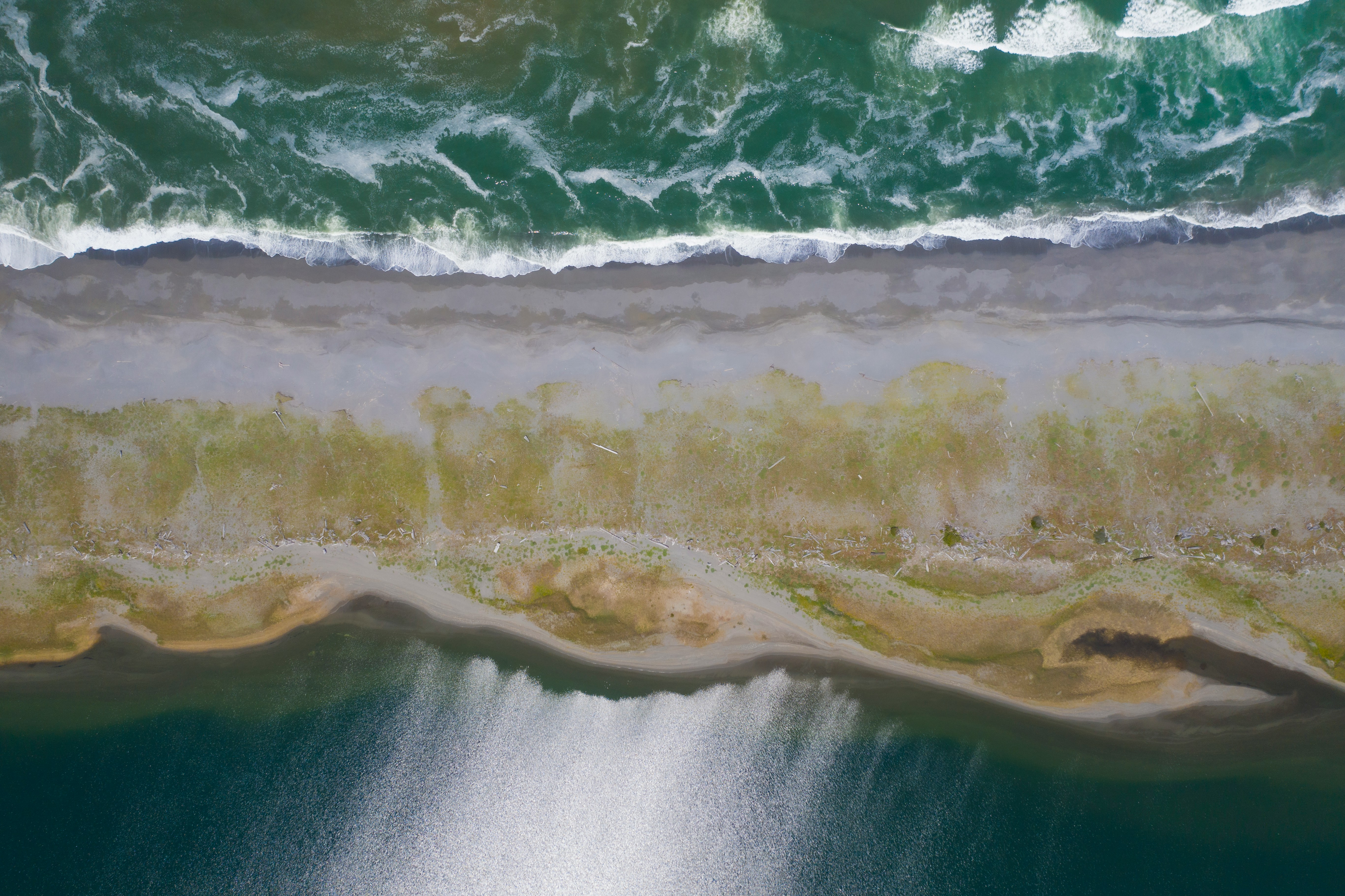 Some saltmarshes could be negatively impacted by rising sea levels. Photo: Dan Meyers on Unsplash
Professor Dagmar Stengel from University of Galway presented her team’s research into seagrass distribution; carbon stocks, accumulation and storage capacity; threats to these ecosystems, and what management options are available.
Seagrasses absorb carbon through photosynthesis, Professor Stengel explained, but added that how much carbon is absorbed - and ultimately sequestered - depends on factors such as light, temperature and salinity. Therefore, the presence of seagrass does not automatically mean that equivalent amounts of carbon are stored.
She revealed that her team have mapped 209 new meadows, but said that there are many more sites to be discovered.
Disease, habitat loss and eutrophication are among the threats facing Ireland’s seagrass meadows, while their location in the marine – as opposed to terrestrial space – makes it difficult to identify ownership.
The protection of existing seagrass habitats is vital, she said, with the next step the restoration of sites that have already been damaged.
Visit our events page for details on upcoming Adapt for the Future seminars.