Wednesday, 28 January, 2026
Researcher: Associate Professor Mark Coen, UCD Sutherland School of Law
Summary
Research led by Dr Mark Coen resulted in a fundamental change to Irish law, ensuring the protection of privately held records relating to Ireland’s abusive, religious-run institutions.
Drawing on years of historical and legal research into the Donnybrook Magdalene Laundry, Dr Coen identified a serious gap in the State’s ability to protect institutional records that are essential to survivors, families, researchers and society more broadly. His work demonstrated that such records were frequently held in insecure, undocumented and legally unprotected circumstances, making them vulnerable to destruction, loss or removal from the State.
Through sustained, evidence-based engagement with the Minister for Children, Equality, Disability, Integration and Youth and senior civil servants, this research directly informed the drafting and enactment of Part 3 of the (opens in a new window)Maternity Protection, Employment Equality and Preservation of Certain Records Act 2024. Enacted in October 2024, the legislation represents a turning point in how the State understands and asserts its responsibility for records linked to institutional abuse.
For the first time, the State formally asserted a legal interest in records previously treated as the private property of religious organisations or third parties. Records that may help people understand what happened to them or a member of their family in institutions such as Magdalene Laundries, Mother and Baby Homes and industrial schools can no longer be altered, destroyed or removed from Ireland. This legal intervention safeguards truth, accountability and memory for present and future generations.
Research description
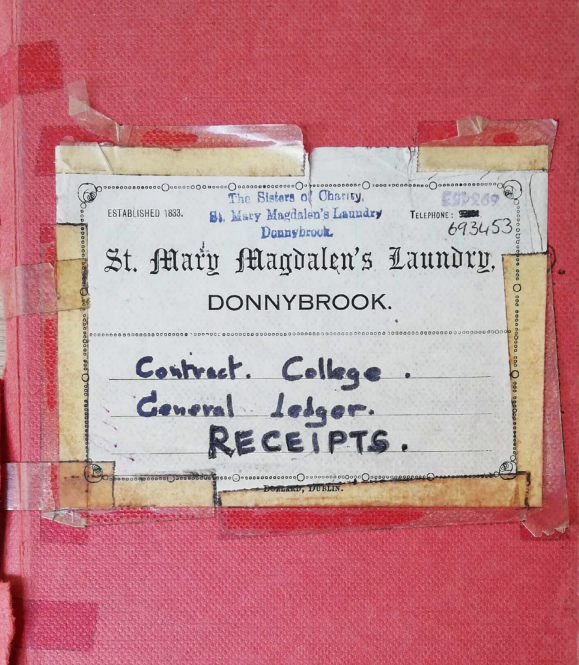
Dr Coen’s research focused on the history and operation of the Donnybrook Magdalene Laundry, run by the Religious Sisters of Charity from 1837 until 1992. During archival and site-based research for what became a major scholarly publication, he discovered financial ledgers and correspondence dating from the 1960s to the 1990s on the site of the abandoned laundry.
The documents were located in a derelict building that was vulnerable to vandalism and environmental damage and was owned by a private developer. At the time of discovery, there was no legal mechanism preventing destruction or disposal of these records. This experience highlighted a broader systemic problem: historically significant records relating to institutional abuse existed in precarious conditions across the State.
The research established that such records:
- could pass into the hands of unrelated third parties,
- were highly vulnerable to loss or destruction,
- could be disposed of legally and without consequence, and
- were vital sources for historical research and survivor understanding.
By incorporating the recovered documents into his research, Dr Coen was able to reconstruct aspects of the social and economic world of the laundry that would otherwise have remained hidden, including its institutional clients, financial operations and correspondence with customers. These insights exposed the urgent need for legal protection of institutional records as a matter of public interest.
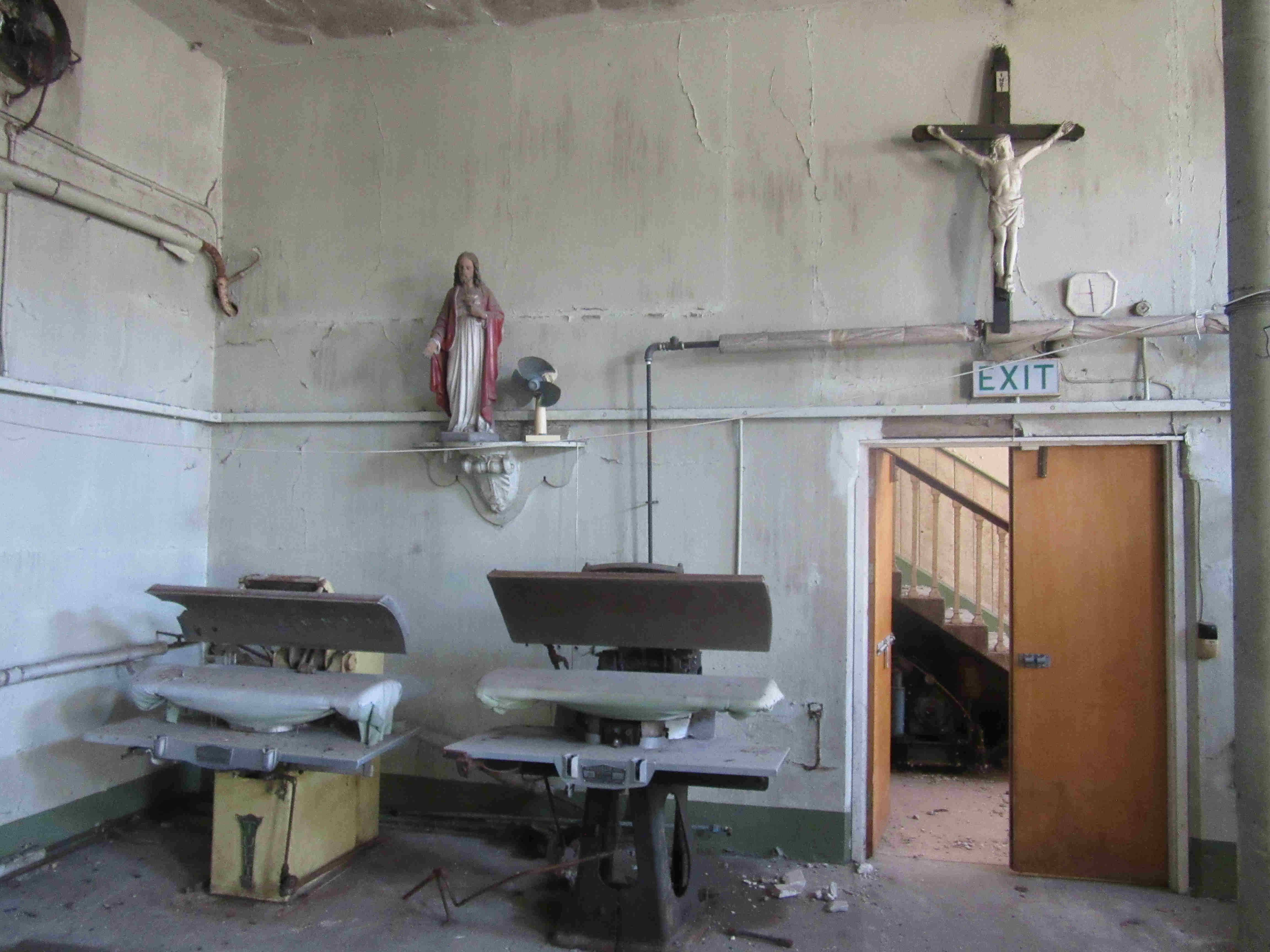 Image above: Interior of Donnybrook Magdalene Laundry. Photo credit: Mark Coen
Research impact
Transforming law and policy
The most significant impact of this research is the enactment of Part 3 of the Maternity Protection, Employment Equality and Preservation of Certain Records Act 2024, passed by the Oireachtas in October 2024.
Dr Coen was the principal advocate for this legislation and drafted a bill that formed the basis for the law that was ultimately enacted. The legislation was agreed in both Houses of the Oireachtas without a vote.
The Act imposes clear legal duties on any person or organisation in possession of records relating to Magdalene Laundries, Mother and Baby Homes, orphanages, industrial schools and reformatories. These records may not be altered, destroyed or removed from the State. Breaching these obligations constitutes a criminal offence. Crucially, the legislation applies not only to religious bodies but also to third parties who may come into possession of such records, addressing risks identified directly through the research.
The legislation also grants the Director of the National Archives new powers to compel holders of relevant records to declare what they possess. Failure to comply is a criminal offence. This provision directly challenges long-standing secrecy surrounding institutional archives and creates, for the first time, a mechanism for the State to identify the existence and location of records that were previously unknown.
If a future Government should legislate to seize all such records – an approach supported by Dr Coen – the 2024 Act will ensure that there are records to seize.
Dr Mark Coen drafted a bill providing for the protection of private records… This bill formed the template for this part of the enacted legislation. Mark’s understanding of and engagement with the political realities of drafting and passing a piece of legislation was essential in the successful passage and enactment of this law.
— Roderic O’Gorman TD, former Minister for Children, Equality, Disability, Integration and Youth
Social impact
The protection of these records has profound social significance. For survivors and their families, access to records can be central to understanding personal histories, validating lived experiences and seeking justice or redress. The Special Advocate for Survivors of Institutional Abuse, Patricia Carey, estimated that the legislation could affect approximately 250,000 people.
More broadly, the law represents a decisive statement by the State that records relating to institutional abuse are not merely private documents, but part of Ireland’s shared historical and moral responsibility. It supports ongoing and future initiatives, including the planned National Centre for Research and Remembrance, which will include an archive at the former Magdalene Laundry on Sean McDermott Street.
While further reform is required, including potential future legislation to seize such records, the 2024 Act ensures that these materials are preserved. In doing so, Dr Coen’s research has helped to secure valuable evidence in pursuit of truth, memory and accountability.