Researcher: Professor Emilie Pine, UCD School of English, Drama and Film
Summary
Between 1930 and 1970, over 42,000 children were committed to Catholic residential Industrial Schools in Ireland, where they suffered physical, emotional and sexual abuse. Associate Professor Emilie Pine led a multi-faceted programme to conduct an in-depth analysis of how the system of abuse operated.
This research combined humanities-led inquiry and digital technologies to produce new knowledge of the scale and complexity of institutional abuse. Through media and educational strategies, Dr Pine and her collaborators have extended this knowledge into a deeper societal understanding of the issue. This work has also helped victims heal, especially through Survivor’s Stories, a project strand that preserves the memories of victims of abuse.
Research description
Background
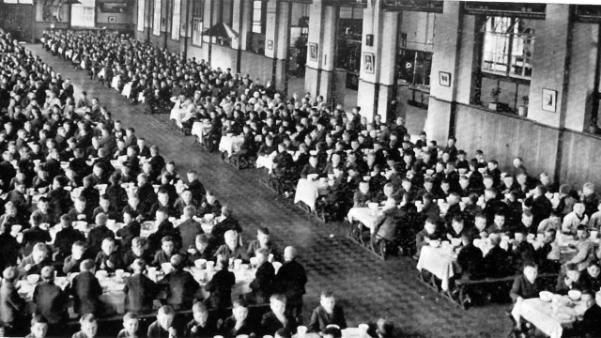
To understand Ireland’s past, we must acknowledge the country’s history of confining the vulnerable to institutions. This history includes the fact that, between 1930 and 1970, more than 42,000 children were committed to residential Industrial Schools, which were overseen and funded by the State. Some were orphans; others came from backgrounds of poverty, parental loss, family dysfunction. The children suffered physical, emotional and sexual abuse, as was comprehensively evidenced in 2009 by the Report of the Commission to Inquire into Child Abuse (the Ryan Report). However, the Ryan Report’s focus on isolated institutions makes it resistant to systematic analysis. By digitising and analysing the Report’s 2,600 pages, Dr Pine’s team have enabled new findings and insights into how the system of abuse operated.
New knowledge
Dr Pine’s IRC-funded research project Industrial Memories (2015-19), with Professor Keane and Dr Leavy, created “paradigm-shifting” insights and ways of understanding through digital analysis:
- Demonstrating for the first time patterns of transferring abusers between schools, illustrating that across different Catholic orders abuse allegations were covered up rather than acknowledged
- Clarifying the role of the Irish State in ignoring evidence of abuse
- Illustrating contemporary public and institutional knowledge of conditions in Industrial Schools
- Creating new methodologies that can also be used to analyse other institutional reports
- Creating experiential ways of knowing through audio and virtual-reality tours of historic institutions
These findings have been widely disseminated to build public and academic understanding, via a website, media, a digital app, academic articles, international conferences, and second- and third-level education.
Survivors’ Stories
Moving beyond the complex historical analysis, and to enhance understanding of major issues for survivors, and help healing, Dr Pine and Dr Mac Cárthaigh worked directly with survivors of institutional abuse to record and preserve their memories of the institutions. For the first time these stories form part of the permanent UNESCO ‘Memory of the World’ National Folklore Collection archive.
The Survivors’ Stories project is a direct response to the proposal to seal witness testimony to the Ryan Commission for 75 years. This oral history project thus represents an opportunity for survivors to take back agency, control and ownership of their stories, and to make these stories part of the public record.
Her work as an academic, researcher and interlocutor between those who have suffered such harm and those who have responsibility to find adequate reparation for it has become integral to the ways in which I have understood the depth of abuse in the past, and its systemic nature.
— Minister for Children and Youth Affairs, Katherine Zappone
Research impact
Social and cultural impact
The digital project Industrial Memories has changed how people see historic abuse, so it is understood as an outcome of systemic failure, rather than “a few bad apples”. The digital humanities methodology underpinning this approach illustrates the value of digitising government reports, and shows how necessary system-wide analysis is to illustrate patterns of failure – such as transferring abusers, failing to respond to parents, and repeatedly refusing to acknowledge abuse.
Building on this, Survivors’ Stories enables future generations to understand how it feels to be abused. This project worked with sixteen individuals over a year to preserve their memories in audio and print, adding a major new strand to the National Folklore Collection. The purpose of this project was to listen to survivors and, through listening, to heal some of their trauma. Survivors’ Stories was launched in May 2019 by the Minister for Children and Youth Affairs, Katherine Zappone, to mark the 10th anniversary of the Ryan Report. Dr Pine has since been invited onto the Board of the Christine Buckley Centre to continue working for survivors’ well-being.
Overall, the project illustrates how research methods focussed on subjective experience can have meaningful impact on an immediate community of survivors, while online digital resources and educational materials (including outreach in schools and lectures at regional history festivals) enable national and international impact. See the References section below for examples of media dissemination.
Academic impact
Industrial Memories uses leading-edge digital techniques to create a state-of-the-art way of analysing digital texts, which can also be used to investigate other government reports internationally. The combination of this digital approach with a deep humanities methodology has impacted researchers in the fields of Child Abuse, Digital Humanities, Folklore, Memory, and Irish studies. Dr Pine and her team have lectured on the project’s methodology in Ireland, Germany, Singapore, Spain, the US, Canada, and Australia. The project has shown how a sensitive and responsive methodology can benefit a range of stakeholders. Crucially, this interdisciplinary project shows the value of combining researchers’ skills across these fields.
Training impact
The methods and outputs of the project have also made an impact in the classroom. In Claregalway Educate Together School, Transition Year students made and exhibited art projects based on Industrial Memories, helping them to understand how much the incarcerated children suffered. The students commented that “they never learnt about any of this in their history classes”. In UCD, students in the Schools of English, Drama and Film, and Computer Science, have studied digital humanities methods together, illustrating how a combination of computational tools and critical thought skills are vital to students from across the university.
Political impact
In 2018, and on foot of Industrial Memories, Dr Pine was invited to advise Minister Katherine Zappone, the Minister for Children and Youth Affairs, with responsibility for dealing with institutional legacies, on how to use the arts to respond to Ireland’s dark history. One of the key insights of Dr Pine’s project is the complex links between industrial schools, mother and baby homes, and Magdalen laundries, illustrating the intersectional nature of institutional history. The utility of the Industrial Memories methodology has further come to the attention of the Taoiseach, as a template for dealing with future government reports.