Wednesday, 28 January, 2026
Researcher: Associate Professor Barry J. McMahon, UCD School of Agriculture and Food Science & Earth Institute
Summary
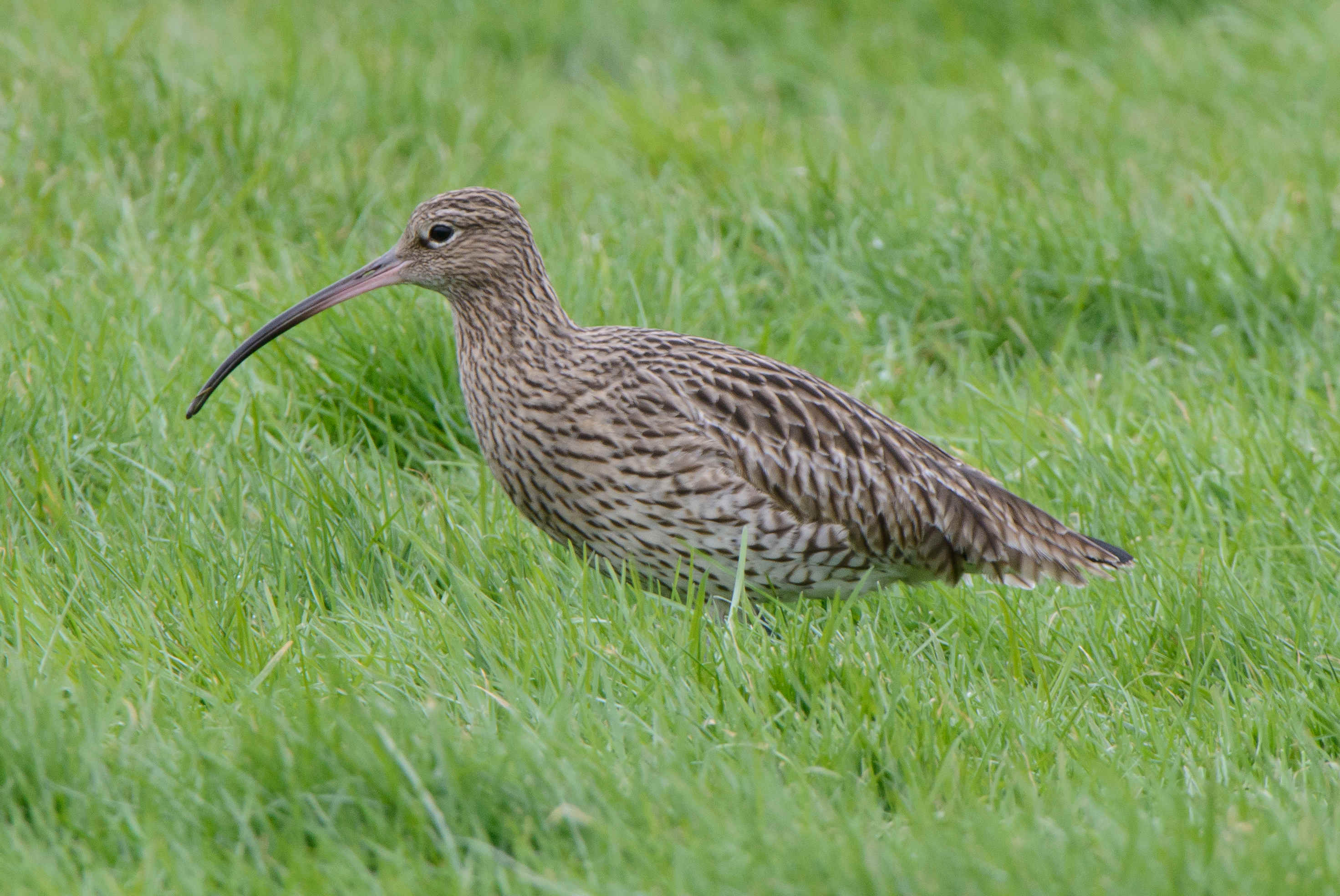
Across Europe, biodiversity loss is accelerating, with bird populations declining at unprecedented rates. Research led by Associate Professor Barry McMahon provides compelling new evidence that ground-nesting birds are experiencing far greater population declines than other bird species, highlighting an urgent conservation challenge.
By analysing long-term population data across Europe, Britain and Ireland, this research shows that 74% of ground-nesting bird species are in decline, compared with 41% of species that nest in trees, shrubs or cavities. The findings point to predation as an important and often overlooked driver of these declines, alongside habitat loss and agricultural change.
The research does not prescribe simple solutions, but it challenges conservation practitioners, policymakers and the public to engage with difficult evidence and to consider predator management as part of integrated conservation strategies. By bringing robust data to a contentious issue, this work has had significant academic, educational, environmental and policy impact.
Research description
Ground-nesting birds, including waders, wildfowl and many farmland species, are especially vulnerable during the breeding season because eggs and chicks are exposed to predation by abundant generalist predators such as foxes, crows and magpies. While habitat degradation has long been recognised as a driver of population declines, the role of predation has remained highly contested, with limited large-scale evidence available to inform policy.
The concept underpinning this research emerged in 2016 following a field visit to a site where lethal predator control was associated with successful breeding populations of ground-nesting birds, including grey partridge (Perdix perdix) and skylark (Alauda arvensis). However, this was a single location. Conducting controlled, long-term predator removal experiments across multiple sites would have been prohibitively expensive and would likely have taken a decade or more to produce robust results.
To address this challenge, Associate Professor McMahon and collaborators developed an alternative, comparative approach. From 2018 onwards, they collated and analysed three large-scale datasets covering Europe, Britain and Ireland, drawing on the Pan-European Common Bird Monitoring Scheme, updated European wild bird indicators (1980–2016), and breeding bird data from the Britain and Ireland Bird Atlas (2008–2011). Species were classified by nesting strategy, allowing the researchers to test whether ground-nesting birds were disproportionately likely to be declining.
The results were consistent and striking across all regions. Ground-nesting species were significantly more likely to show long-term declines than other nesting guilds, particularly in Britain and Ireland. These findings were published in the Journal of Applied Ecology in 2020 and provided one of the first continent-wide quantitative assessments linking nesting strategy, predation risk and population decline.
Research impact
Academic impact
The paper provided clear, accessible evidence of the scale and severity of declines among ground-nesting birds, prompting renewed discussion within the ecological and conservation science communities. It became one of the most downloaded papers in the Journal of Applied Ecology between 2019 and 2020 and has continued to influence subsequent research, including follow-on studies examining the interaction between predation and habitat management.
Crucially, the research enabled more constructive and evidence-based discussion of predator management, a topic often dominated by polarised views. By framing the issue around population-level patterns rather than ideology, the study helped move debate towards scientifically grounded conservation planning.
Educational, environmental and health impact
The findings are now embedded in teaching within UCD, including undergraduate modules and the MSc in Wildlife Conservation and Management, ensuring that future conservation practitioners engage critically with complex and challenging ecological trade-offs. The research is also regularly presented at national and international academic and policy-focused events, including One Health workshops that link ecosystem health with animal and human wellbeing.
Social and political impact
The research attracted extensive media coverage, including interviews on (opens in a new window)BBC Radio 4, (opens in a new window)RTÉ Radio 1, (opens in a new window)Newstalk and specialist conservation programmes. These engagements brought a sensitive scientific debate into the public domain and helped communicate the urgency of biodiversity loss in accessible terms.
A policy-oriented summary of the work was published in Science for Environment Policy, a European Commission publication distributed to over 18,000 policymakers, academics and practitioners across Europe. Selection for this outlet signalled the relevance of the research to EU environmental policy and conservation decision-making. The findings have since been cited in Irish, Norwegian and Flemish policy documents, contributing to discussions on managing ground-nesting bird populations within wider biodiversity strategies.
By encouraging open, evidence-led discussion of difficult conservation choices, Associate Professor McMahon’s research has helped reshape how declines in ground-nesting birds are understood and addressed across Europe.