Wednesday, 28 January, 2026
Researcher: Professor Orla Doyle, UCD School of Economics & UCD Geary Institute for Public Policy
Summary
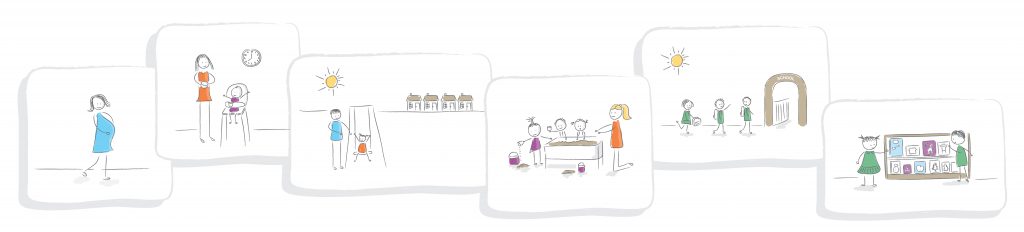
Professor Doyle’s research demonstrates how early investment in parenting can change children’s life trajectories. For 18 years, she has led one of Ireland’s longest-running randomised controlled trials, (opens in a new window)Preparing for Life(opens in a new window) (PFL), a prenatal-to-school-entry programme developed in disadvantaged Dublin communities to reduce inequalities in child development.
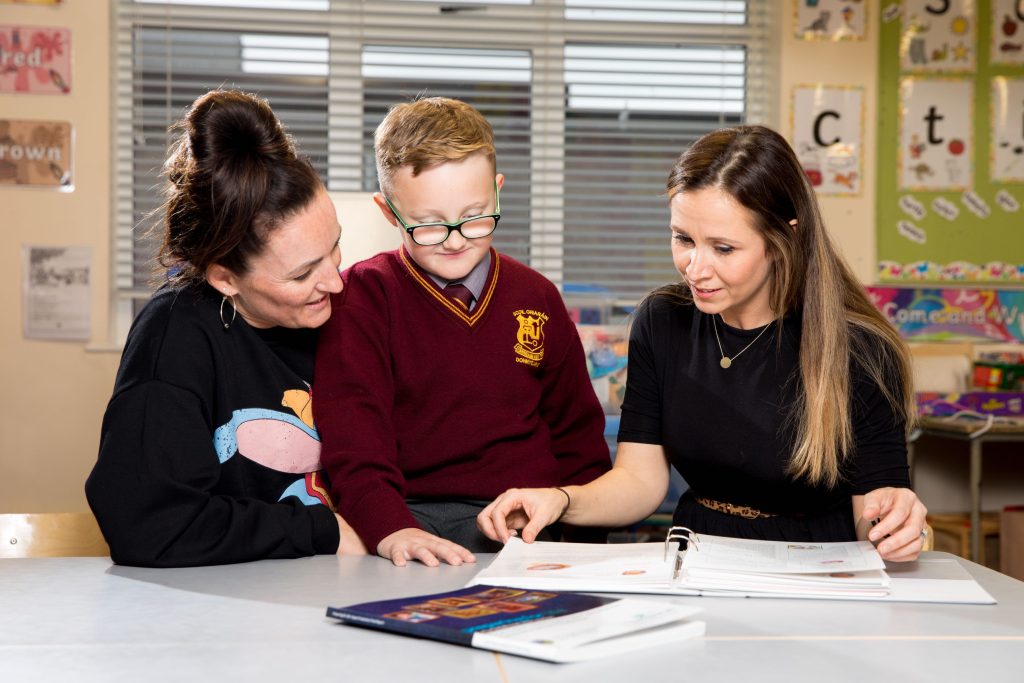
Families in the high-support group received regular home visits, parenting workshops, and baby massage classes. By age 14, children in this group showed sustained educational, cognitive, and health advantages. These and other important findings informed Ireland’s National Home Visiting Programme and, with Tusla’s support, PFL has been rolled out to ten additional communities nationwide. The research shows how early, evidence-based interventions can inform public policy and deliver lasting change for children and families.
Research description
Where a child is born and the environment in which they grow up can profoundly influence life outcomes. Children from disadvantaged backgrounds face elevated risks of poorer health, education, and employment. Neuroscience confirms that the brain is particularly malleable from pregnancy to age three, making early caregiving crucial.
The Preparing for Life (PFL) study explores the effects of providing sustained parenting support during the first five years of life in certain disadvantaged Dublin communities. Beginning in 2008, 233 pregnant women were randomly assigned to either a low or high support group. Both received basic developmental supports, but the high-support group participated in home visits, baby massage classes, and group parenting sessions. The programme draws on attachment theory, social learning, and socio-ecological frameworks, emphasising a strengths-based approach that nurtures family potential and dignity.
Over 18 years, Professor Doyle has followed both groups, finding that high-support children consistently outperform their peers. By age 14, they demonstrated better cognitive functioning, working memory, attention, and health outcomes. The research shows that early, sustained support for parents can permanently alter life trajectories, demonstrating the power of evidence-based early intervention.
Research impact
Political impact
PFL has directly influenced Irish policy. The findings informed (opens in a new window)First 5: A Whole-of-Government Strategy for Babies, Young Children and their Families and contributed to government investment of over €40 million in Area-Based Childhood (ABC) Programmes and Prevention, Partnership & Family Support initiatives. In 2022, the ABC programmes reached 10,127 parents and 27,274 children. The HSE's framework document on (opens in a new window)Healthy Weight for Children, directly cites PFL findings on obesity as informing their Action on "Community-based interventions for healthy behaviours".
This impact was achieved through engagement with ministers and policymakers via briefings, events, and PFL’s membership in the Home Visiting Alliance, which helped shape the National Home Visiting Programme.
Practice and social impact
PFL has been expanded to ten other communities, supporting over 450 families across Bray, Athy, Newbridge, Balbriggan, Finglas, Ballinasloe, Castlebar, Bagenalstown, Kilrush, and Ballaghaderreen. International recognition includes listing by the US Department of Health & Human Services on the Home Visiting Evidence of Effectiveness list, making PFL the only Irish programme eligible for US federal and state funding. A Chicago-based adaptation, Creciendo Juntos, began in 2023, supporting 250 Latino families in collaboration with Nobel Laureate, Professor James Heckman.
PFL findings have featured widely in Irish media, including the Irish Independent and Irish Times, and on national radio (Morning Ireland, Today with Clare Byrne, Drivetime). Two documentaries, including (opens in a new window)The Health Effect(opens in a new window) (2019), have reached over 19,000 viewers on YouTube.
The findings and recommendations contained within these reports will be most valuable to my department as we work to develop a sustainable national approach to home visiting services to improve outcomes for parents and their children. I would like to acknowledge the work of the UNITES team and to Professor Orla Doyle from UCD, who delivered these substantial pieces of research.
— Minister Roderic O’Gorman
Educational and academic impact
The PFL study informs two UCD modules and has trained over 50 postdoctoral fellows, PhD students, research assistants, and international interns in rigorous, community-engaged research. In total, 26 academic publications have emerged from the trial, covering outcomes from birth to age 14, including a landmark article in the Journal of Political Economy. PFL has featured in hundreds of invited talks, influencing both academic and non-academic audiences.