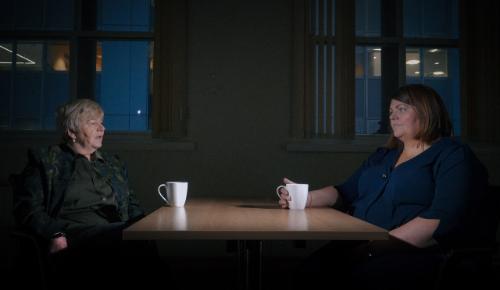
Researcher: Dr Heidi Riley, UCD School of Politics and International Relations
Summary
Women play an important role in peace mediation, but their experiences are often overlooked. Dr Heidi Riley’s research shed light on the diversity of experience among women working in mediation and peacebuilding from across the island of Ireland, including migrant and refugee women.
The project had a notable impact on the grassroots women peacebuilders who participated in the project. It provided a space for them to share their experiences and achievements, and influenced discussions on how they perceive and value their roles as ‘peace mediators’ and the challenges they face. Through this work, Dr Riley and colleagues also influenced the development of several mediation and peacebuilding networks. The project has wider social and academic impact through the development of a short film, as well as an article that contributes to the ‘Women, Peace and Security’ literature.
Research description
Statistics on peace mediation show high levels of gender inequality. For instance, studies on peace negotiations show that women only make up 4% of mediators. However, statistics like this focus almost exclusively on high-level peace talks while excluding peace mediation at the grassroots level. This is an area where women are more highly populated, yet their experiences are frequently ignored.
On the island of Ireland women have played vital roles in all areas of conflict resolution and peacebuilding. There are also women now living on the island who come from areas of conflict, and who have important peacebuilding and mediation experience, such as mediating between contentious groups at the local level. Yet findings demonstrated that this is frequently overlooked.
Dr Riley’s research therefore mapped the diversity of women’s experiences in peace mediation across the island of Ireland and exposed the multitude of challenges women face in this area. Her research was carried out between May 2019 and March 2020. She held four focus groups with women in Belfast, Derry/Londonderry, Dundalk and Dublin.
Through these events, Dr Riley and colleagues engaged with 46 women peacebuilders who use or have used peace mediation skills in their peacebuilding work. The events provided a space to reflect on the value of their work and share their insights and experiences. As a way of more directly representing the voices of women in this field, and to make the findings more accessible to a wider audience, a short film titled ‘Women’s Voices: Building Networks’ was produced. The film provides insight into the key findings of the research, explained from the perspectives of the research participants. It identifies what women bring to mediation processes, the challenges women face in the field of mediation, and the diversity of methods they use.
A public seminar was also held on the 11 March 2020, attended by roughly 80 people, including women practitioners, NGOs, academics, and representatives of the Department of Foreign Affairs and Trade. The seminar included a screening of the short film and panel discussions with participants and experts in the field of mediation.
A real opportunity to connect, reflect, and share with other women our collective knowledge and experiences of peace building and mediation.
— Focus group participant
Research impact
Social and cultural impact
The focus groups had a direct impact on the individual participants by helping them redefine the peacebuilding work that they do on a daily basis. Importantly, before the discussions, women didn’t necessarily recognise themselves as peace ‘mediators’ despite using mediative practice in their work. This led to participants reconsidering the importance of their work, since the term ‘mediator’ is often given more value than that of ‘peacebuilder’.
One participant originally from the Democratic Republic of Congo, who came to live in Monaghan as part of a resettlement programme, noted how she was “waiting for an opportunity to participate in something like this”. Her work on mediating between families and warring groups, while she was in refugee camps in Burundi and Tanzania, had not been recognised or valued since she came to Ireland. As a result of the project, she is now on the steering committee of Glencree’s All-Ireland women’s peacebuilding network (see Policy section below).
Narratives that highlight the experiences, expertise and challenges that women face in gaining space at a negotiating table were made more widely visible via the short film, which has had almost 600 views since it was made public online in April 2020.
Policy impact
The project has influenced strategic planning for programmes at the (opens in a new window)Glencree Centre for Peace and Reconciliation, an Irish-based international hub for conflict resolution and promoting sustainable peace. It helped inform the development of their All-Ireland Network of women Peacebuilders, which has now been formally established and held its first online event in September 2020.
As a result of the project, Christian Aid has recently applied for UN funding to develop a women’s peacebuilding network as part of their programmes in Burkina Faso, to address issues of discrimination and exclusion in the transition towards peace in the North and center North region.
The project also contributed to Ireland’s (opens in a new window)National Action Plan on United Nations Security Council Resolution 1325 on Women, Peace and Security, led by the Conflict Resolution Unit in the Department of Foreign Affairs. From this perspective, the project has encouraged discussions on the possible development of a more formal Irish network of women mediators, which can contribute to better connecting local and global peacemaking processes and increase Ireland’s influence in promoting the Women, Peace and Security agenda.
Academic impact
The forthcoming article in the journal Dealing with the Legacy of Conflict in Northern Ireland through Engagement & Dialogue, based on the findings of the research, has an impact on the Women, Peace and Security literature, by challenging the narrow focus of how ‘peace mediation’ is defined. It argues that to the term’s current formulation – focused primarily on high-level peace negotiations – contributes to the lack of recognition of women’s expertise in this field.
Educational impact
The short film has made an impact on the teaching of this subject as it has become a teaching resource for courses on gender and conflict at UCD and TCD.