Cultural Analytics: Mapping the past, visualising the future
Share

AI and machine-learning techniques enable arts and humanities researchers to explore patterns in cultural materials, in a new and vibrant field of research known as cultural analytics. The field has been defined as the analysis of massive cultural data sets using computational and visualisation techniques. This can mean mapping cultural change, and cultural continuities, through analysis of literary materials over time.
Most of all, cultural analytics uses intelligence-based technologies to illuminate cultural processes that have shaped our society, helping us to understand both the processes and the outcomes and, by learning through understanding, to "find new opportunities and possibilities." (Prof Gerardine Meaney, Director, (opens in a new window)UCD Centre for Cultural Analytics)
Old stories illuminate the present
(opens in a new window)Prof Gerardine Meaney is a Professor of Cultural Theory at UCD School of English, Drama and Film and Director of UCD Centre for Cultural Analytics where her research team combines UCD’s strengths in cultural criticism and social network analysis, traditional humanities and new computational approaches.
An expert on the application of new digital methodologies to humanities research, Gerardine leads several large-scale projects including (opens in a new window)VICTEUR: European Migrants in the British Imagination: Victorian and Neo-Victorian Culture, (opens in a new window)Contagion: Biopolitics and Cultural Memory, and (opens in a new window)Nation, Genre, Gender which maps and analyses social networks in Irish and English fiction from 1800 to 1922.
Gerardine is also a member of the UCD Gender, Culture and Data team, who use data science methods to counteract the historical biases which often obscure women’s histories. Including postdoctoral researcher (opens in a new window)Dr Maria Butler and machine learning expert (opens in a new window)Associate Professor Derek Greene, UCD School of Computer Science, the team is conducting a pilot project integrating biographical information from the Dictionary of Irish Biography and the Field Day Anthologies. So far, they have shown how integrating data silos can reveal new, notable patterns and amplify previously underrepresented women’s voices including oral storytellers and early modern historical figures.
These and other highlights from the Gender, Culture and Data team were presented at an interdisciplinary workshop, Gender, Culture and Data: Collaborative Approaches to Women’s Histories,' attended by literary and cultural scholars, historians, librarians, archivists and computer scientists, and reported by the Insight Research Ireland Centre for Data Analytics.
Trust, data and public health
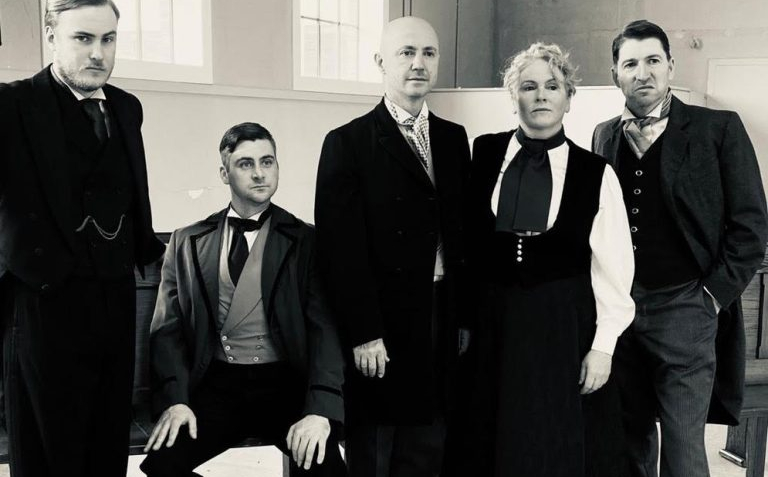
An exciting spin-off from the VICTEUR project is (opens in a new window)Miasma, a gripping and accessible one-hour play about the fight against the cholera pandemic in 1840s-50s London, following the unconventional pioneering doctor, John Snow, as he invents epidemiology and pioneers data science - which will begin touring in 2026.
This October, UCD Centre for Cultural Analytics participated in the Royal College of Physicians of Ireland (RSPI) annual 'Heritage Day' to mark the launch of phase two of the project, engaging audiences in the issues around science, data and public health.
Industrial Memories, Survivors Stories
Between 1930 and 1970, over 42,000 children were committed to Catholic residential Industrial Schools in Ireland, where they suffered physical, emotional and sexual abuse. Professor (opens in a new window)Emilie Pine led a pioneering research programme to conduct in-depth analysis of how the system of abuse operated.
Her research combined humanities-led inquiry and digital technologies to produce new knowledge of the scale and complexity of institutional abuse. Through media and educational strategies, Emilie and her collaborators have extended this knowledge into a deeper societal understanding of the issue. This work has also helped victims heal, especially through Survivor’s Stories, a project strand that preserves the memories of victims of abuse.
Opening up creative possibilities
Gerardine and her team at UCD are using new computational approaches and analytical techniques that have generated very valuable data sets, which they make freely available to other researchers and which are useful across multiple diverse subject areas.
UCD Centre for Cultural Analytics acts as a focus and host for international networks and an incubator for new projects in a rapidly developing and prestigious field.
Learning how the medieval Irish legal system worked
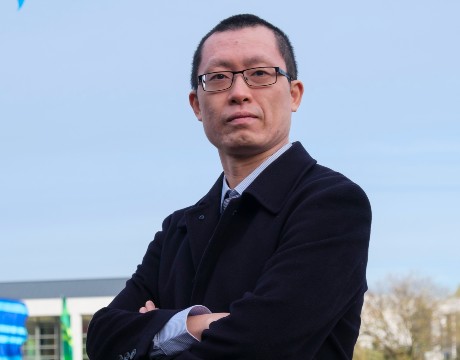
Led by (opens in a new window)Associate Professor Fangzhe Qui at UCD School of Irish, Celtic Studies and Folklore, the fascinating FLEXI project (Fluid texts and scholars' digests: (re)production of law in medieval Ireland) explores how law was transmitted and reproduced by scholars rather than by a centralised authority in medieval Europe, by studying the late medieval Irish legal ‘digests’.
FLEXI involves research in the fields of intellectual history, law in medieval Ireland, palaeography, comparative legal history and digital humanities. By combining linked data model and network analysis, comparative legal history and natural language processing methods, FLEXI examines the structure and connections of the texts besides their contents, focusing especially on their compilatory principles and intellectual networks. It will revolutionise how we use medieval documents to understand intellectual life and textual reproduction.
Learn more and find resources from FLEXI.
UCD: Ireland's leader in Digital Humanities
The UCD College of Arts and Humanities is home to a community of scholars whose work with digital collections, spaces, and tools has garnered international recognition. The digital humanities research strand brings together researchers working across a wide range of disciplines, methodologies and theoretical perspectives, in order to facilitate dialogue, knowledge-sharing and resource development. Humanities research is uniquely poised to contribute to emerging conversations on the ethical and social implications of our digital present, taking place both within and beyond the university.
Visit UCD College of Arts and Humanities to learn about the researchers, themes and projects in this field.
 (1).jpeg)
