With the largest concentration of researchers in AI and data science and the most powerful infrastructure for AI, UCD is Ireland's leading university in artificial intelligence. UCD School of Computer Science is home to leading experts, nationally and globally, in key areas including security, data science, machine learning, AI, digital health, foundations of computing, human-computer interaction, information systems, intelligent sensing and multimedia technologies - as well as several of the country's most important research and technology centres.
Leading Ireland to the next frontiers of computing and data sciences
Share

The rapid acceleration of artificial intelligence over the past decade has demanded a step-change in how universities conduct research, build talent pipelines, and translate breakthroughs into real-world impact. At UCD, this transformation has been a priority. Our community of computer scientists, data scientists, and researchers in mathematics and statistics have not only kept pace with the evolving frontier of AI but have helped to define it.
Through world-leading research and innovation centres, as well as major national and international collaborations - including deep partnerships with industry - UCD has cultivated an ecosystem of excellence and leadership that is shaping the trajectory of intelligent technologies, nationally.
Rising to the challenges and opportunities of AI
Associate Prof Brian Mac Namee is a leading expert in AI and Machine Learning, particularly in recommender systems, which are AI-driven tools designed to suggest items that a user is likely to find relevant or interesting, widely used in platforms such as Netflix, Amazon, YouTube, Spotify, and social media feeds. Brian is co-Director of the (opens in a new window)Insight Centre for Data Analytics, one of Europe’s largest AI centres which uses data analytics to improve decision-making in vital sectors including health, public infrastructure, and industry.
He is also co-director (opens in a new window)ML-Labs, the centre for research training in machine learning, and co-PI on the (opens in a new window)AURA project, Advanced UCD Research in Artificial Intelligence.
Ireland's centre of gravity for large-scale AI research
UCD is a driving force behind the nation’s largest AI research programmes, leading or co-leading the majority of them. This portfolio reflects both the scale of our ambition and the depth of our community's impact, nationally and beyond.
They include: (opens in a new window)CeADAR, Ireland’s Centre for AI, which acts as a bridge for industry, helping Irish SMEs and companies to adopt AI technology to stay competitive; (opens in a new window)Insight, one of Europe’s largest AI centres, which uses data analytics to improve decision-making in vital sectors including health, public infrastructure, and industry; (opens in a new window)UCD NetsLab, a leading engineering lab designing the future of telecommunications, ensuring next-generation mobile networks are secure, efficient, and AI-driven; UCD AI Ecosystem Accelerator, a commercial support programme to grow indigenous Irish tech companies; and (opens in a new window)DReal, a PhD programme focused on the future of digital media, preparing the workforce for the next generation of the internet.
Learn more about major centres affiliated with UCD.
Advanced UCD Research in AI
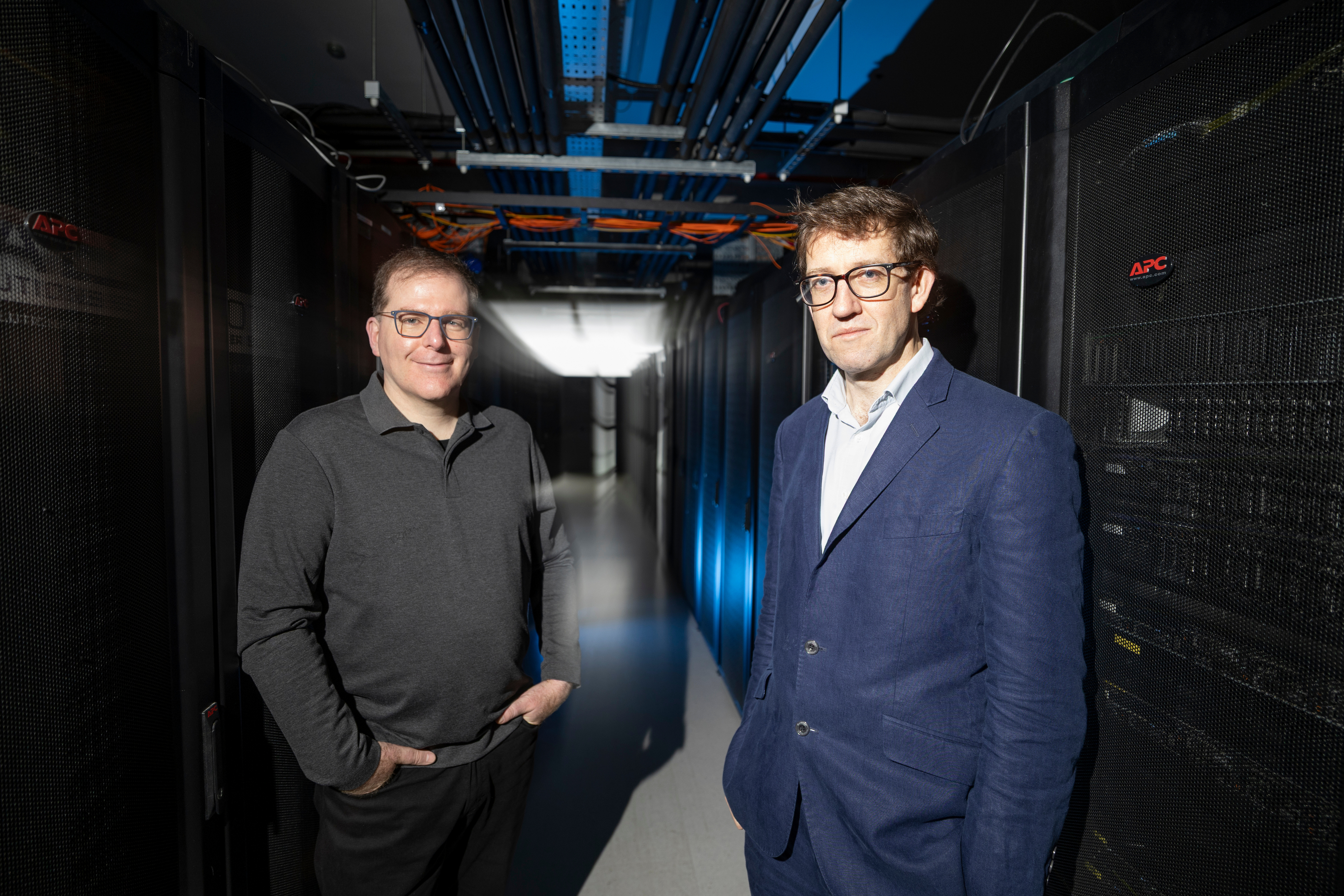
With 50-times the performance capability compared to UCD's existing HPC cluster, the university's AURA project leads tell all about UCD's new AI supercomputer, in an exclusive interview with Silicon Republic.
The new Nvidia supercomputer will accelerate AI-powered research on the campus and allow students from across fields to access the high-end technology. Called Advanced UCD Research in Artificial Intelligence (AURA), the supercomputer project – representing the single biggest investment in AI supercomputing by the university – is funded through the Higher Education Research Equipment Grant.
Podcast: the evolution of AI
Artificial intelligence is about building computers that can think and act in ways we usually expect from humans—making judgments, interpreting information, and applying what they know to new situations. By developing AI, we not only create smarter machines, but also learn more about how people think, decide, and get things done. Machine learning is a key part of AI. It allows computers to learn from data and experience, improving over time without being given step-by-step instructions.
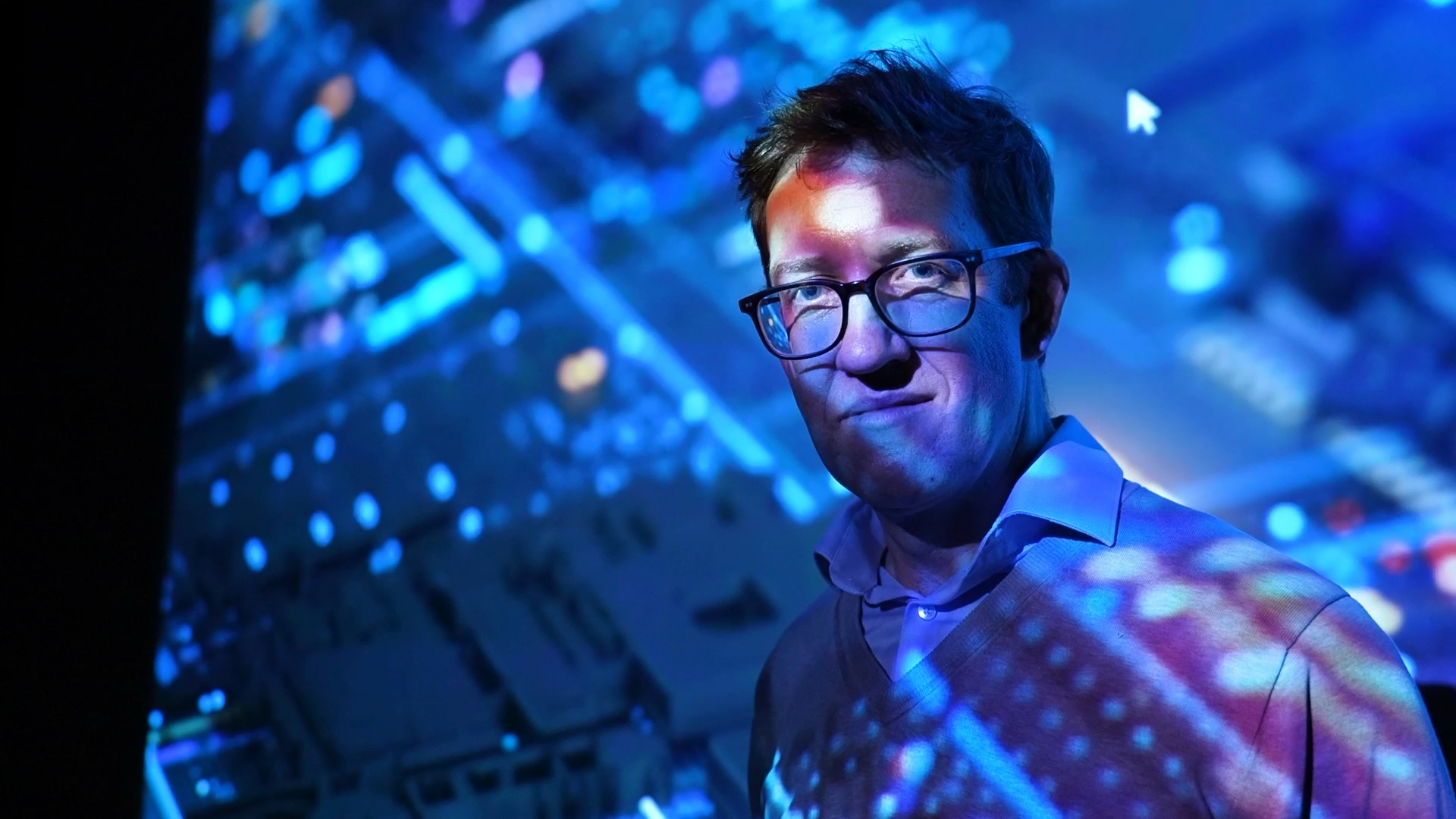
On Tech Radio Ireland podcast, Brian Mac Namee talks about the journey of AI, from Clippy in Microsoft Word to ChatGPT, he explains how large language models are only the public face of a technology that’s been evolving for decades.
Thought leadership: AI, jobs and the future of work
In this episode of the Talent Fix podcast, leading expert at UCD School of Computer Science, (opens in a new window)Dr Andrew Hines explains how Artificial Intelligence is reshaping the jobs landscape.
In it he discusses why timeless skills such as critical thinking and problem-solving will matter more than ever in the AI era, Geoffrey Hinton’s call to give AI a 'mothering instinct,' why AI agents may be cheap and plentiful but not wise, and why humans will need to act as AI shepherds to guide them responsibly.

National 'game changer' for the digital economy
Funded by Research Ireland and Skillnet Ireland and supported and facilitated by Technology Ireland ICT Skillnet, the (opens in a new window)Centre for Research Training in Foundations of Data Science is a large-scale training programme developing experts in the complex mathematics and statistics that serve as the 'engine room' for the entire digital economy.
Bringing together a diverse spectrum of applied domains from almost every discipline with fundamental mathematics and statistics, this large-scale collaborative PhD programme is a collaboration between the University of Limerick, UCD and Maynooth University - co-led by UCD's (opens in a new window)Prof Claire Gormley - combining the expertise of world-class academics, international collaborators and industry partners.
AIMSIR: AI for Meteorological Services, Innovation and Research
UCD hosts a major centre to harness artificial intelligence to transform weather forecasting, supporting Ireland’s preparation for the growing risks posed by climate change. The first of its kind in Ireland, the AIMSIR (AI for Meteorological Services, Innovation and Research) Centre was established with a €5 million investment from Met Éireann, the Irish National Meteorological Service.
Bringing together more than 60 UCD researchers across disciplines including mathematics, statistics, computer science, physics, engineering, and climatology, and led by (opens in a new window)Prof Andrew Parnell, the centre provides Ireland with a hub of expertise at the intersection of data science, meteorology, and climate research.
Learn more about AIMSIR.
Developing models to detect and analyse gravitational waves
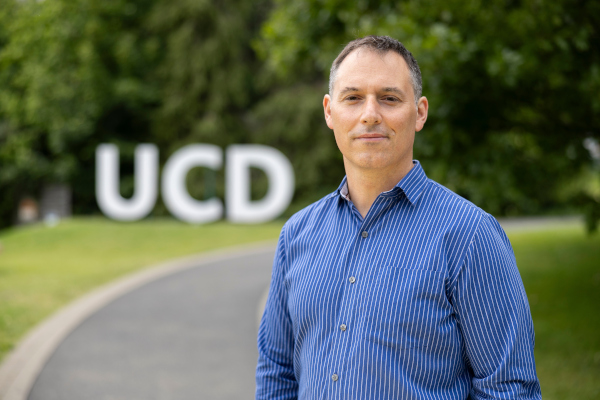
UCD School of Mathematics and Statistics is recognised for its excellence and leadership in computational mathematics, with experts in models and data analysis across diverse fields. Associate Prof (opens in a new window)Barry Wardell has been awarded a prestigious ERC Advanced award to develop models to accurately detect and analyse gravitational waves captured by the European Space Agency-led Laser Interferometer Space Antenna (LISA) - the first mission to probe the entire history of the universe using gravitational waves.
Gravitational waves are ripples in the fabric of space-time emitted during powerful astronomical events. The EMRIWaveforms project could revolutionise our understanding of the universe. Read the article.
Barry co-leads the (opens in a new window)UCD Relativity Group which is dedicated to advancing research in black holes, gravitational waves and related areas of theoretical physics, and spearheads Irish involvement in LISA mission through LISA Ireland.
More at UCD School of Mathematics and Statistics
From breakthroughs that reshape theory to collaborations that tackle real-world challenges, research at the UCD School of Mathematics and Statistics is vibrant, ambitious, and wide-ranging. From developing the talent pipeline to drive innovation in data and intelligence-based technologies, to driving discovery at research frontiers in areas including network modelling and causal inference in AI, see some highlights of funded research at the school.