Ireland offers blueprint to protect households from energy cut-offs
4 February 2026
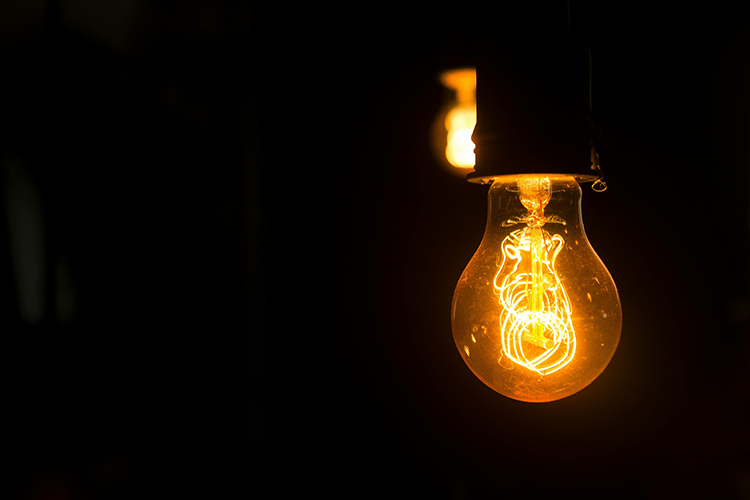
Ireland’s approach to protecting vulnerable energy consumers could help other countries phase out harmful electricity disconnections without destabilising power markets, new research has found.
In a time of rising energy prices even the threat of being cut off from electricity and gas has been shown to amplify stress, health problems and deepen financial hardships.
Ireland’s electricity disconnection rate for non-payment of electricity bills is one of the lowest in Europe, but (opens in a new window)a new study examining consumer protections in Spain, France, Ireland and Australia has found that more strategies could be adapted to ensure health and wellbeing.
"Ireland’s Energy Engage Code shows how disconnection policy can prioritise support over punishment. The commitment to keep engaged customers connected provides a model other countries could adopt," said Orla Dingley, from the UCD School of Social Policy, Social Work and Social Justice.
“Ending harmful disconnections is a policy choice, not an inevitability of how energy markets operate,” said lead researcher Associate Professor Nicola Willand, from RMIT University in Melbourne, Australia.
“If governments and regulators are prepared to act, they can design systems that keep households connected while still allowing energy businesses to remain viable.”
Led by RMIT University, in partnership with Universidad Autónoma de Madrid, University College Dublin and ISG International Business School in France, recommendations for Ireland include:
- Extending disconnection protections to users of prepayment meters and those in apartment complexes or caravan parks who buy electricity through a private intermediary.
- Reducing power supply rather than full disconnection to ensure that households retain access to essential energy services.
- Mandating disconnection protection of customers who have flagged financial hardship for all retailers, that is beyond those who have signed up to the Energy Engage Code.
- Introducing a minimum debt threshold to protect disconnections for low amounts of debt.
- Broadening vulnerability categories for full year-round disconnection protection to better include risks related to health, income, household composition and energy efficiency of the home.
- Progressing collaborative approaches with social and consumer services to identify vulnerability and solve customer hardship.
Across Europe, 20 million households were disconnected from electricity and gas at some point during 2022, according to the EU Agency for the Cooperation of Energy Regulators.
In Spain, vulnerable customers cannot be disconnected and the electricity costs of the most vulnerable are shared between retailers and local governments, while a national social bonus tariff provides discounts of up to 65% for designated vulnerable households.
In France and Ireland, households are protected from disconnection during winter and in both France and Spain supply can be reduced rather than cut off completely, allowing essential household services to be maintained.
The Australian Electricity Market presents a minimum debt level of at least AU$500 and $AU$1000.
France, Spain and Australia do not have prep-payment meters that affect self-disconnections.
The team behind the study believe its findings underline the need for evidence-led action in many countries to extend disconnection prohibitions and strengthen safeguards for vulnerable consumers.
“By examining European and the Australian models, we can see stronger protections against disconnections are both feasible and effective,” added Professor Willand.
“Existing European safeguards could be further strengthened and adapted elsewhere to ensure secure access to essential energy services.”
This research was funded by Energy Consumers Australia, an independent organisation established by the Council of Australian Governments to advocate for residential and small business energy consumers.
By: David Kearns, Digital Journalist / Media Officer, UCD University Relations
To contact the UCD News & Content Team, email: newsdesk@ucd.ie