Explore UCD

UCD Home >

Visiting Global Fellowship Program

Visiting Global Fellowship Program

The UCD Institute for Discovery creates a culture of idea exchange and collaboration that drives cutting edge research excellence. It provides a highly interdisciplinary research environment to address complex challenges, generate innovative solutions, raise new questions and discover unexpected connections.

Through our Visiting Global Fellowship Program, we invite eminent and highly distinguished researchers from leading global institutions to visit us in Dublin, Ireland.

This program supports both established and early stage career researchers with a reputation for excellence, to spend time at UCD and engage with the university community across disciplinary boundaries.

Call Details

UCD Discovery Visiting Global Fellows contribute to the research activities of the university and seed strong research collaborations with local research groups, with a view to continued engagement beyond the period of the fellowship.

UCD Discovery supports three Fellowship Types:

  • Discovery Distinguished Fellows are established world leaders in their field with an international reputation for interdisciplinary leadership, research and impact. Their visit is championed by a UCD researcher who works with the institute to curate a series of high-quality engagement events with the university community.
  • Discovery Early Career Fellows are early career fellows (2-12 years post PhD) with the potential to produce world class research whose research cuts across disciplinary boundaries. They will work with local UCD researchers on topics of mutual interest and fully take part in the research life of the university.
  • Self-funded Fellows are self-funded visitors to the university whose research straddles a number of disciplines and who would benefit from affiliation with the Institute for Discovery. These fellows will benefit from ‘in-kind’ supports from the Institute, such as networking supports, engagement activities, institutional affiliation etc.

In addition to the fellowship award, all successful candidates will have access to Discovery’s programmatic and administrative support.
Collaboration with UCD Faculty

Discovery Visiting Global Fellows are expected to contribute to the scholarly community at UCD. This includes interacting with staff and students, and participating in the scholarly activities of Schools, Centres and Institutes. Fellows are encouraged to communicate in advance with any research groups or individuals with whom they would like to collaborate.

The Institute can help applicants to identify potential collaborators prior to their visits, as well as arranging networking activities during the fellows’ visit. 

Research Outputs

Applications will be evaluated based on the proposed research activies and expected outputs from the the visit. Research Outputs may include:

  • Senior Global Fellows are expected to give a public keynote lecture or similar during their visit.
  • Joint research publication.
  • Joint funding application.
  • Development of strategic inter-institutional connections.
  • Host and/or Speaker at university based Workshop, Conference or Symposium.
  • Host / attend meetings with Academic, Industrial and Government stakeholders.

The University provides Visiting Global Fellows with a bursary from€1000 - €3000 to include;

  • University approved hotel or self-catered accommodation
  • Return airfare in economy class, booked by the University 
  • Transfers to and from UCD
  • Access to the University's computing and library facilities.

The University cannot offer a buy-out for teaching at the home institution. Candidates will usually be on a sabbatical or research leave, or indicate a time when they are free during the year.

Visiting Global Fellows may be nominated by Academic Schools at UCD, and invited to the University by UCD Discovery for collaboration proposals under the research theme of AI and Healthcare.

Applications for the incoming academic year are now full. 

For more details on the program please contact Tara Byrne at discovery@ucd.ie.

Global Visiting Fellows

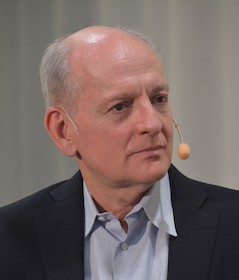
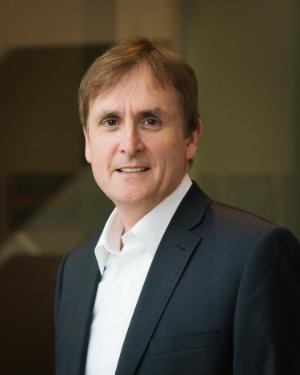
Profile photo of Prof. Anthony Elliott

Prof. Anthony Elliott

June 2022
Professor Anthony Elliott is Dean of External Engagement at the University of South Australia, where he is Executive Director of the Hawke EU Jean Monnet Centre of Excellence and Network, and Research Professor of Sociology.

View Profile
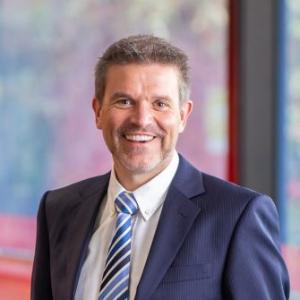
Profile photo of Prof Antonio Puliafito

Prof Antonio Puliafito

National CINI Smart City Lab & University of Messina, Italy

Prof Antonio Puliafito is director of the National CINI Smart City Lab and professor of computer engineering at the University of Messina, Italy. His interests include parallel and distributed systems, networking, IoT, Cloud computing and advanced analytical modeling techniques. He contributed to the development of the software tools WebSPN, ArgoPerformance and Stack4Things. He co-authored the book Performance and Reliability Analysis of Computer Systems. He leads the Center for Information Technologies at the University of Messina (CIAM). From 2006 to 2008 he acted as the technical director of the Project 901, winner of the CISCO innovation award. He actively contributed to the success of the TriGrid VL and PI2S2 projects. Prof Puliafito has worked on several EU funded projects such as Reservoir, Vision Cloud, CloudWave, Beacon and Frontier Cities. He was the main investigator of the Italian PRIN2008 research project Cloud@Home, to combine cloud and volunteer computing.

View Profile
Profile photo of Prof Piero Baglioni

Prof Piero Baglioni

Professor of physical chemistry at the University of Florence and Director of the Italian Centre for Colloid and Nanoscience (CSGI)

For four decades Prof. Baglioni has pioneered modern techniques in art conservation and restoration which are detailed in the book he co-edited, Nanoscience for the Conservation of Works of Art. His scientific interests focus on the Physical Chemistry of soft matter systems, both from a fundamental and an applicative point of view. Prof Baglioni gave a Discovery talk in November 2019 to coincide with the Machines of Leonardo exhibition celebrating the 500th anniversary of the Italian maestro’s death. His talk was entitled New Methods and Materials for the Conservation of Cultural Heritage: From Renaissance Frescoes to Modern and Contemporary Art. 

View Profile
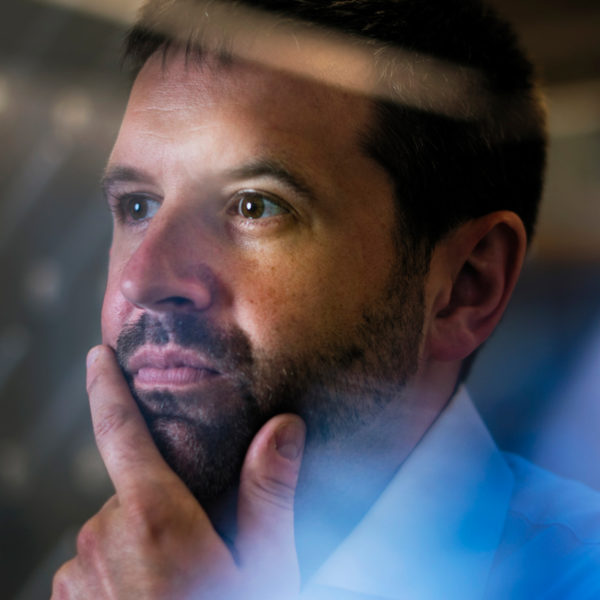
Profile photo of Mr Christopher Painter

Mr Christopher Painter

US State Department

Mr Christopher Painter is a globally recognised leader and expert on cyber security, cyber diplomacy and cyber crime. He worked for two years on the National Security Staff of the White House as President Barack Obama’s Senior Director for Cybersecurity. As United States top cyber diplomat (2011-17) he was instrumental in negotiating a landmark agreement regarding the theft of intellectual property with China. Mr Painter has been at the vanguard of U.S. and international cyber issues for over twenty-five years, first as a prosecutor of some of the most high-profile cybercrime cases in the country and then as a senior official at the Department of Justice, FBI, the National Security Council and finally the State Department. He gave a Discovery public lecture on Conducting Diplomacy and Combating Threats in Cyberspace in September 2019.

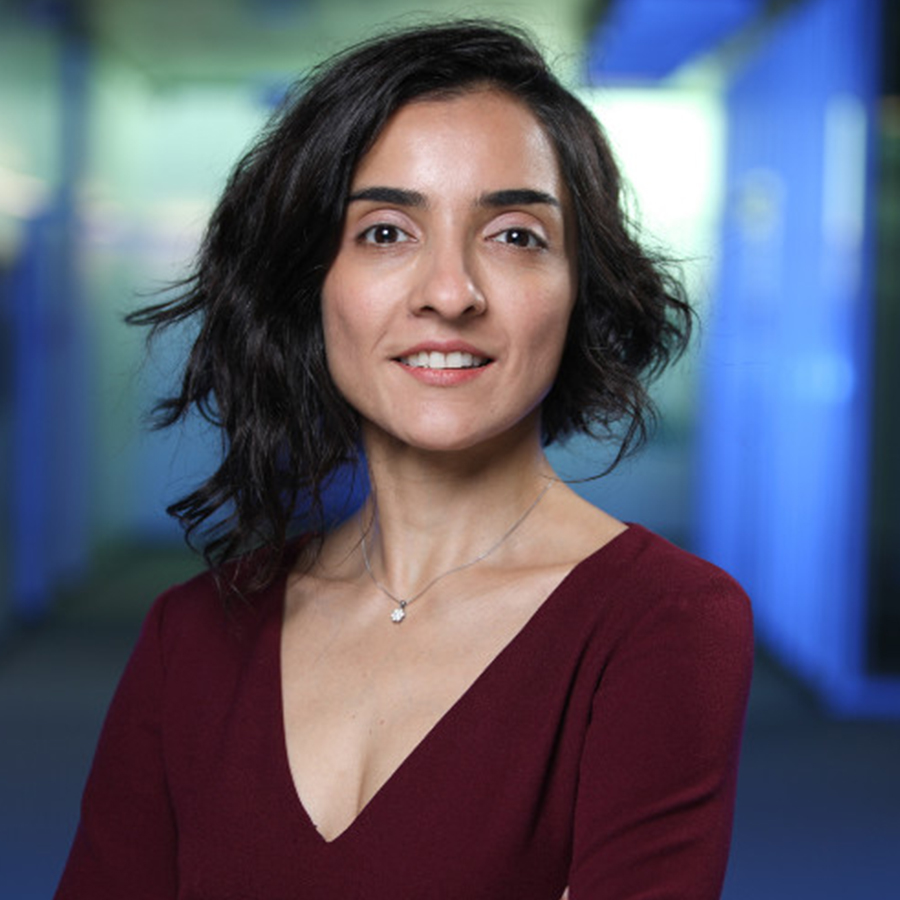
Profile photo of Prof Dianne Van Der Wal

Prof Dianne Van Der Wal

Senior Research Fellow at the Australian Red Cross Blood Service

Prof Van Der Wal is interested in platelet signalling and her current project focuses on the platelet responses of apheresis platelet donors.  During her PhD (Utrecht University, the Netherlands), she demonstrated that novel death pathways were triggered in cold-stored platelets as a result of molecular changes in one of the platelet adhesion receptors. Some patients suffering from bleeding disorder Immune thrombocytopenia (ITP) are unresponsive to current treatments. Prof Patricia Maguire supervised Prof Van der Wal as she expanded her research into extracellular vesicles. “I am most excited about joining forces and coming up with new out-of-the-box research ideas and potentially foster and rekindle other European collaborations with scientists in the field,” said Prof van der Wal. “Moreover, this fellowship will expand my research at the Australian Red Cross Blood Service as well as helping me to grow further as a senior scientist.”

View Profile
Profile photo of Prof Alan Winfield

Prof Alan Winfield

Roboticist with the Bristol Robotics Lab and visiting professor at the Department of Electronics at the University of York

Prof Winfield's research interests include robot ethics, cognitive science, artificial intelligence and open science. Prof Winfield is “committed to the widest possible dissemination of research and ideas in science, engineering and technology” and believes “that robots provide us with a wonderful vehicle for public engagement.. & intelligent robots will become ubiquitous in the near future and we therefore need to start a dialogue now about the ethical and moral questions that will arise.” He gives two reasons for his fascination with robots: 1) They are complex and potentially useful machines that embody just about every design challenge and discipline there is. 2) They allow us to address some deep questions about life, emergence, culture and intelligence in a radically new way, that is by building models. His keynote Discovery public lecture in July 2019 was on Engineering and Ethics of Ethical Machines.

View Profile
Profile photo of Dr Joanna Goodey

Dr Joanna Goodey

Head of the Freedoms and Justice Department in the European Union Agency for Fundamental Rights

Her research interests span criminology, fundamental rights and human geography.  From the mid-1990s she held lectureships in criminology and criminal justice, first in the law faculty at the University of Sheffield and subsequently at the University of Leeds. She was a research fellow for two years at the UN Office on Drugs and Crime and has been a consultant to the UN International Narcotics Control Board. She was a regular study fellow at the Max Planck Institute for Foreign and International Criminal Law in Freiburg. Dr Goodey is the author of the academic textbook Victims and Victimology: Research, Policy and Practice (2005) and co-editor of the book Integrating a Victim Perspective within Criminal Justice: International Perspectives (2000). Her keynote Discovery public lecture was on AI and Fundamental Rights: Not Only a Question of Ethics.

View Profile
Profile photo of Prof Noel Sharkey

Prof Noel Sharkey

Professor of AI and robotics and professor of public engagement at the University of Sheffield.

The head judge on popular BBC series Robot Wars he has held a number of research and teaching positions in the UK (Essex, Exeter, Sheffield) and the USA (Yale and Stanford). 
Co-founder of the Foundation for Responsible Robotics, Prof Sharkey has highlighted racism, sexism and bias in algorithms and the need for human supervision of Lethal Autonomous Weapons [LAWs]
He has moved freely across academic disciplines, lecturing in departments of engineering, philosophy, psychology, cognitive science, linguistics, artificial intelligence and computer science. 
He holds a doctorate in experimental psychology and a doctorate of science and was an EPSRC senior media fellow (2004-2010).  In April 2019 Prof Sharkey gave a Discovery Public Talk entitled Algorithmic Injustice and Artificial Intelligence in Peace and War.

View Profile
Profile photo of Prof Kathleen Richardson

Prof Kathleen Richardson

Professor of ethics and culture of robots and AI at De Montfort University, Leicester.

Kathleen Richardson is professor of ethics and culture of robots and AI at De Montfort University, Leicester. She is director of the Campaign Against Sex Robots and senior research fellow in Ethics of Robotics and part of the Europe-wide DREAM project (Development of Robot-Enhance Therapy for Children with AutisM).  Prof Richardson completed her PhD at the Department of Anthropology, University of Cambridge. Her fieldwork was an investigation of the making of robots in labs at MIT. After her PhD she was a British Academy Postdoctoral Fellow (BAPDF) at University College London. Her postdoctoral work was an investigation into the therapeutic uses of robots for children with autism spectrum conditions. Prof Richardson wrote the books An Anthropology of Robots and AI: Annihilation Anxiety and Machines and Challenging Sociality? An Anthropology of Robots, Autism and Attachment. Her Discovery public lecture in November 2017 was entitled A Human Attachment Crisis: Can the Robots Save us?

View Profile