UCD AI Governance Principles
Institutional principles rooted in UCD values that guide AI use, ensuring transparency and compliance with the EU AI Act and GDPR.



Artificial Intelligence (AI) has quickly become a part of everyday life, impacting how we learn, teach, conduct research, and manage our day to day administrative tasks. Across UCD, colleagues are exploring its potential in different ways and with varying perspectives on its value, impact, and appropriate use. What unites these perspectives is a shared need: the capacity to critically engage with, assess, and use AI with confidence and care.
As we navigate the opportunities and challenges of AI, we must remain guided by the University’s enduring mission; to create knowledge, to empower learning and to engage with partners to drive impact from education and research, ensuring that the integration of AI into our work benefits, rather than compromises, these core aims.
UCD is committed to supporting all staff in developing this capability. Our goal is to ensure a baseline level of AI literacy across the University, a shared understanding of what AI is, how it can be used responsibly, and how it connects to our University values of collegiality, creativity, inclusion, engagement, excellence and integrity. The draft definition below outlines what we mean by AI literacy in UCD.
AI Literacy is the shared foundation of knowledge, skills, and attitudes that enables faculty, staff and students to engage with AI responsibly, critically, and effectively. It encompasses an understanding of ethics, privacy, governance, and risk, in line with UCD values and applicable regulatory obligations (including the EU AI Act, GDPR, and academic integrity standards). Alongside the practical ability to use AI tools appropriately and transparently, it includes the attitudes of curiosity, openness, and balanced scepticism needed to navigate a rapidly evolving digital landscape.
UCD’s AI Literacy Framework sets out a shared foundation across three key dimensions, Knowledge, Skills, and Attitudes, all underpinned by a Governance that ensures alignment with University policy, regulatory obligations, and ethical standards. Together, these elements guide how training, resources, and practice are developed across the University.

This dimension focuses on building a clear understanding of the concepts, considerations, and responsibilities that shape AI use at UCD. It includes knowledge of AI itself, and of its intersection with ethics, privacy, data governance, human oversight, relevant regulation, and the sustainability implications of digital technologies.

Skills emphasise the practical ability to apply AI tools appropriately in different contexts, evaluate outputs and risks with confidence, and use transparent, well-reasoned practices that match the right tools to the right tasks.

Attitudes highlight the mindset needed for responsible engagement with AI: curiosity, balanced scepticism, collective responsibility, and a commitment to learning, adaptation, and continuous improvement as technologies and practices evolve.

Governance sets the structures that ensure AI is used ethically, transparently, and in line with UCD’s values, policies, and regulatory obligations. It incorporates clear roles, oversight mechanisms, and review processes across teaching, research, and operations, supporting consistent, accountable, and confident practice University-wide.
The above pillars can be seen as housing the core characteristics that serve as the common language for UCD’s AI literacy, informing the design of all training resources and local policies.
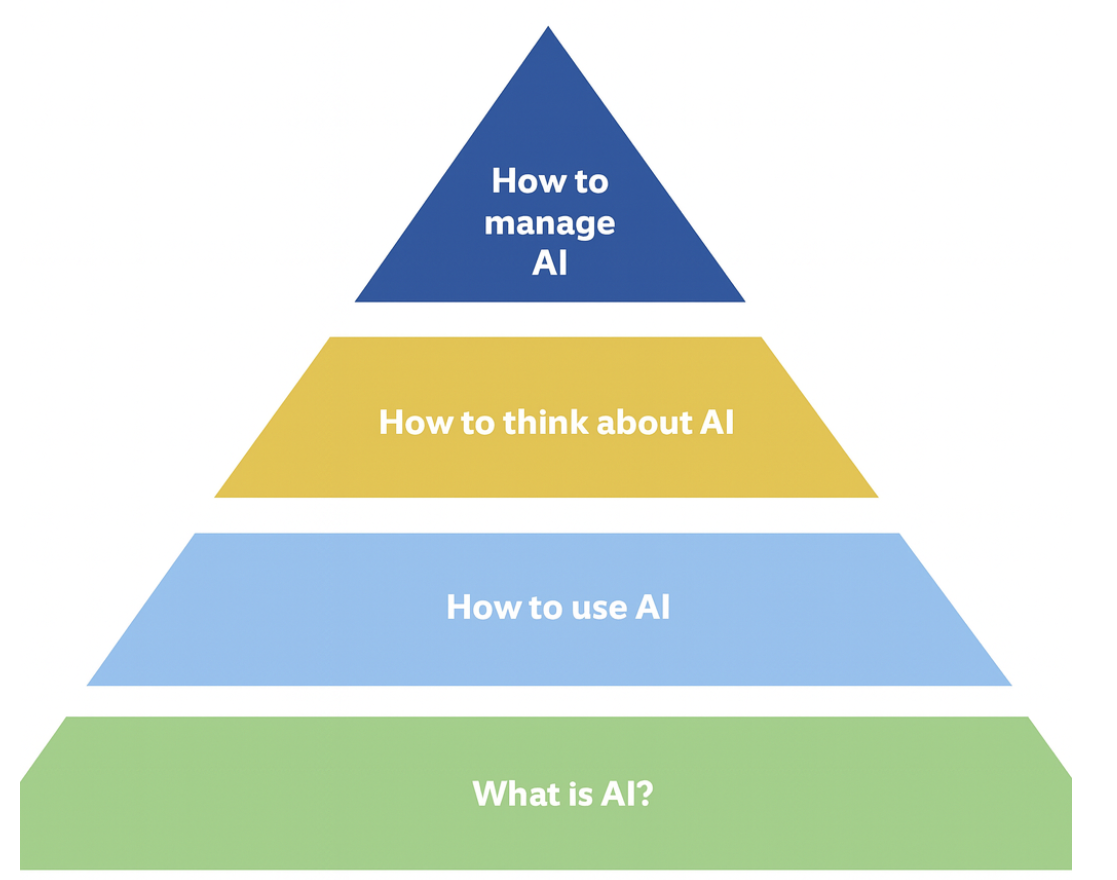
A University-wide AI Literacy training programme is currently in development and is expected to be available to all staff in early 2026. This will provide a shared foundation of knowledge, skills, and practical examples to help staff engage confidently and responsibly with AI in their work.
In the meantime, a number of valuable resources are linked below. These resources support staff in exploring and applying AI appropriately within their own contexts, whether for teaching, research, or day-to-day administrative and operational tasks.