Changes in Travel Behaviour: Exploring Whether Physical Distance Still Matters
Wednesday, 4 February, 2026
Share
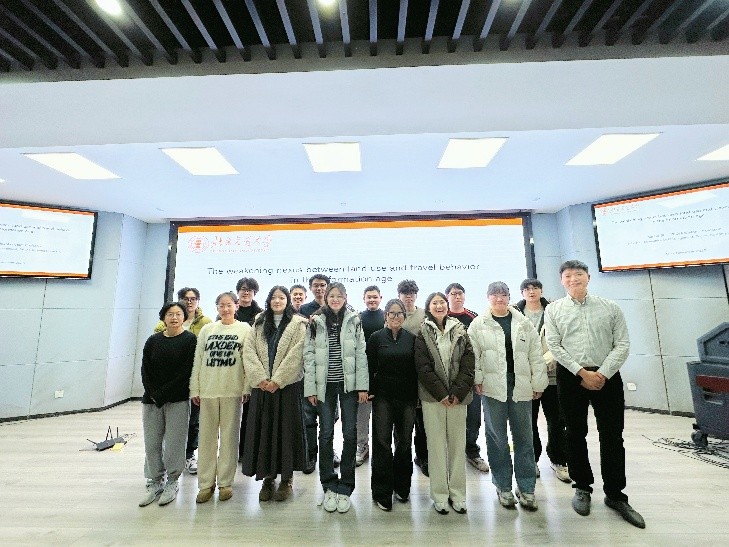
Written by PLAN4007 Student Group 3, UCD Xiaoliqi Chai, Yucong Du, Yihan Gao, Jiamiao Guo, Hongyu Jia, Lincen Jiang, Zihao Li, Junao Liu, Yang Shao, Xiner Su, Siyan Wang, Qiuyue Wang, Yaoxing Wei, Zhiren Xu, Zhishuo Zhang.
About the TCPEP Lecture Series 2025 ‘Transport, Development and Society’
Organised by Dr. Yunpeng Zhang and Dr. Caterina Villani, the CDIC-TCPEP Lecture Series brings together leading academics and practitioners to explore critical issues at the intersection of urban planning, development, and transport. The third lecture featured Dr. Kunbo Shi from Beijing Jiaotong University, who presented his research titled “The weakening nexus between land use and travel behaviour in the information age” The session attracted students and faculty from relevant disciplines.
Dr. Shi explored how digital technologies were reshaping the relationship between urban land use and travel patterns. Starting with the “First Law of Geography”, he highlighted the changes of human activities in the information age and discussed whether geographic proximity remained relevant today. Dr. Shi's academic focus is on information geography and digital cities. In the lecture, he emphasised that while physical distance still mattered, its role was being transformed by digital platforms and internet technologies, which caused new challenges to conventional urban planning principles.
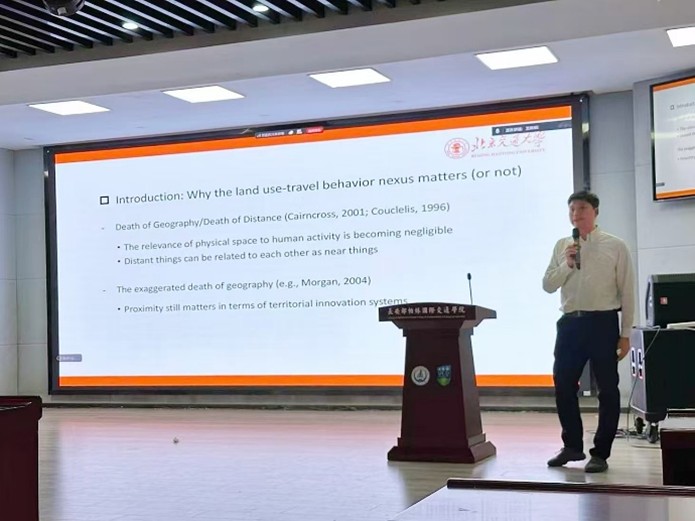
Dr. Shi was giving the introduction of “Death of geography”
A lively Q&A session followed, allowing further discussion between Dr. Shi and audiences. During the Q&A session, our team further discussed the impact of online services on proximity with Dr. Shi. In response, Dr. Shi argued that the expansion of e-commerce leads to a weakening in the competitive value of geographic proximity for physical retail stores. He said: “But as for how weak it will be, I think it’s hard for me to answer. This will be regulated by the market, and eventually the market may reach a certain stable state.” Building on the concept of “social stable state”, Dr. Shi mentioned the theory of socio-technical transition, noting that it takes about 30-40 years for a new innovation to stabilise within the socio-economic fabric.
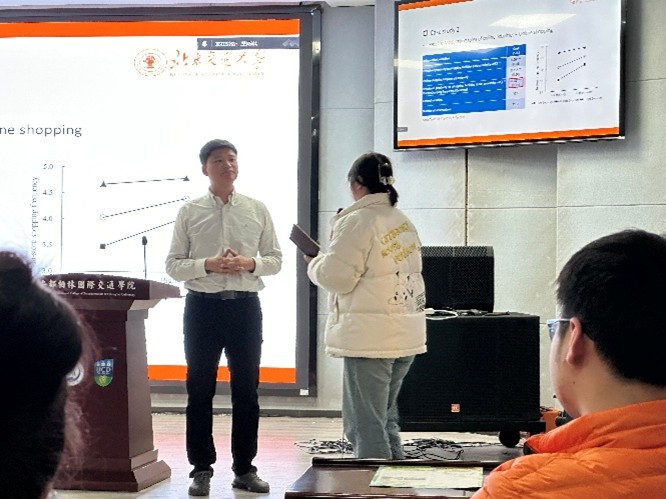
Group members engage with Dr. Shi during the Q&A session
Another issue our team asked about was social equity during the current situation. Dr. Shi offered a thoughtful view. He reminded that if policymakers stop improving proximity simply because its relationship with travel behaviour has weakened, it would create inequity for those unable to use digital services. He, therefore, highlighted that policy formulation must carefully balance social fairness, practical efficiency, and infrastructure costs, rather than making arbitrary decisions.
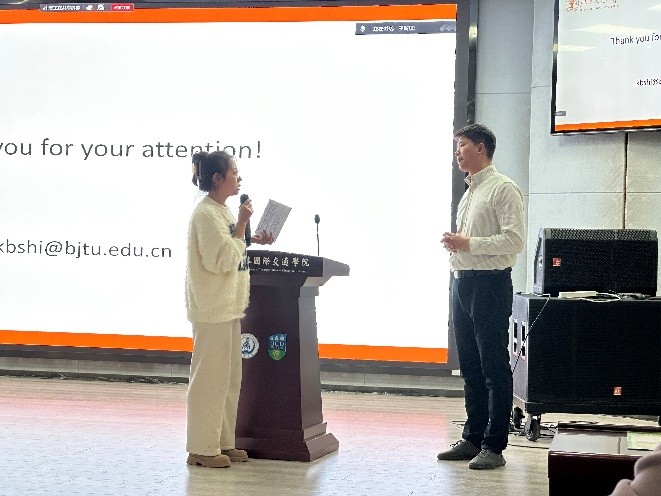
Group members engage with Dr. Shi during the Q&A session
After the lecture, our group had a casual chat with Dr. Shi. When the topic turned to food delivery, he brought up a fascinating concept of the “delivery-only kitchen”, also known as the “ghost kitchen”. These kitchens located in low-cost areas, serve multiple distant neighbourhoods, separating food preparation from local commercial spaces. This phenomenon actually reveals a new trend, which means platforms and modern logistics have disrupted the traditional link between land use and travel. The direct correlation between urban fabric and food flow is fading but not gone.
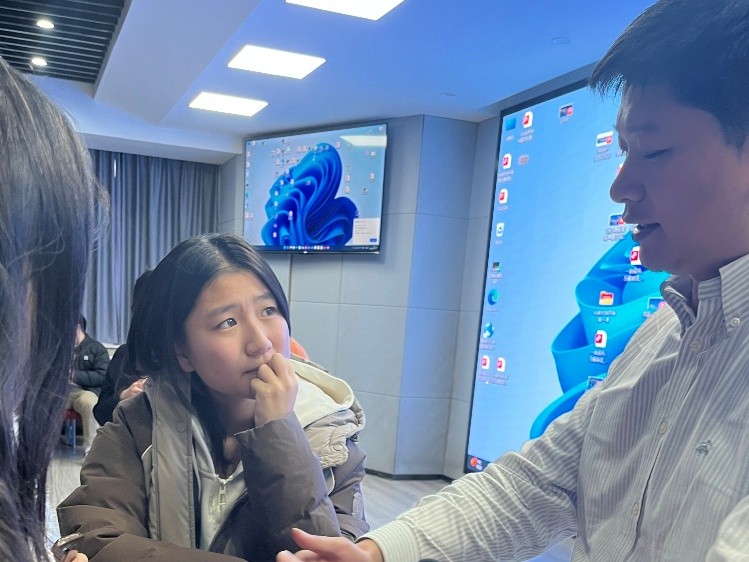
Group members engage with Dr. Shi after the lecture
This prompted deep reflection among students in the Smart Cities and Transportation course. As future urban planners and policymakers, it must be recognised that the changes brought about by the information age. Planning needs to balance physical accessibility and changing needs with ensuring social equity and addressing the diverse needs of vulnerable groups in the digital age.