


- Bring together key stakeholders, including some students who could help in developing the approach based on what they think would be helpful and might work
- Establish local gaps in terms of the UCD Principles and Objectives of academic advising
Developing a School Approach to Academic Advising
Senior academic advisors are appointed by heads of schools to oversee the provision of academic advising in the school, in line with University policy. This web page has been created to support them.
If you are a senior academic advisor, the content on this page will help you get started in developing an approach to academic advising in your school. Before you start the content on this page, you should read the other pages in this section:
- Introduction - This page provides an overview of academic advising in UCD and the context for the pilot.
- Getting Started - This page gives practical advice around how to plan and conduct academic advising meetings.
- Educational Plan - This page contains an overview of the content of the videos on the Getting Started tab made by the National Academic Advising Association to provide guidance on how academic advisors can help students evaluate their interests and abilities and create goals to develop an academic plan. It also provides guidance on how academic advisors can help students to develop critical thinking and independent decision-making skills to make and accept responsibility for academic decisions.
- Academic Advising System - This page gives an overview of the academic advising IT system and contains links to the system and to training and support.
It is likely that schools will refine their approach to academic advising by continuously improving over time. Each school will develop an approach that reflects the needs of the discipline and other local factors, such as faculty-student ratios.
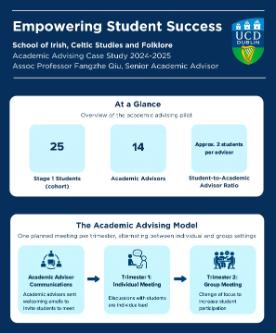
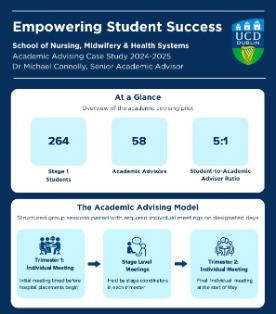
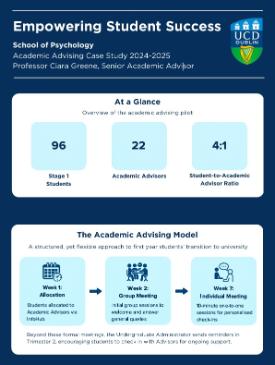
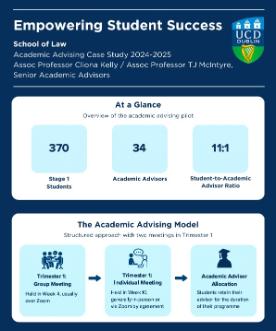
Academic Advising - Case Studies from Year One of the Pilot 2024-25
The following case studies from year one of the academic advising pilot will give you a synopsis of the different approaches taken by the schools involved.
Steps for Developing an Academic Advising Approach
Senior academic advisors may find the following steps useful for developing an academic advising approach in their school.
-
Step 1
-
Step 2
- Develop local academic advising conversational framework using key strategies for engaging students
- Establish key areas of focus, reflections and plans for students
-
Step 3
- Decide how to implement the academic advising approach (e.g., group or individual meetings, timetabled, communications)
-
Step 4
- Implement local logistics and communications
Academic Advising School Exercise
The Developing an Academic Advising Approach Exercise can help schools to develop a local approach to academic advising and ideally should be undertaken at a meeting of relevant academic staff, professional staff and students.
Connecting with Students
The challenge of student engagement is not limited to academic advising. Clear messaging to students about academic advising and its benefits is essential. This should include outlining the purpose of meetings and advising students that they can follow up with questions. It is recommended that academic advising be initially launched at school level. This could take the form of an email from the senior academic advisor to the students and an overview of what academic advising is in class or at another in-person event, if that opportunity is available. This should be followed by an introductory communication from individual academic advisors to their students. Depending on the circumstances, the Strategies for Promoting Student Engagement with Academic Advising may be appropriate for your school. These communications are easily facilitated by the e2s academic advising system, and there is a UCD Academic Advising web page for students. Depending on the timing of meetings, it may be appropriate for academic advisors to check in with students at key points during the year.
Resources and Templates
A Google folder of Academic Advising resources is available to all UCD staff. The purpose of the academic advising shared folder is to:
- support colleagues by providing access to documents and templates, which may be adapted as necessary
- allow colleagues to share documents and templates relating to academic advising.
The folder is accessible via https://bit.ly/ucdacademicadvising and contains a mixture of useful documents including academic plans, student reflections, a conversational framework, academic advising branding images, e2s system guides and a demo. The following is a selection of items that you may find of interest:
- An example of an Educational Plan
- Academic Advising Student Reflection Templates
More Information
For more information on developing an academic advising approach in your school and obtaining system access and licenses, senior academic advisors should contact judith.archbold@ucd.ie or by telephone at extension 8520.