
Mapping Triclabendazole Resistance
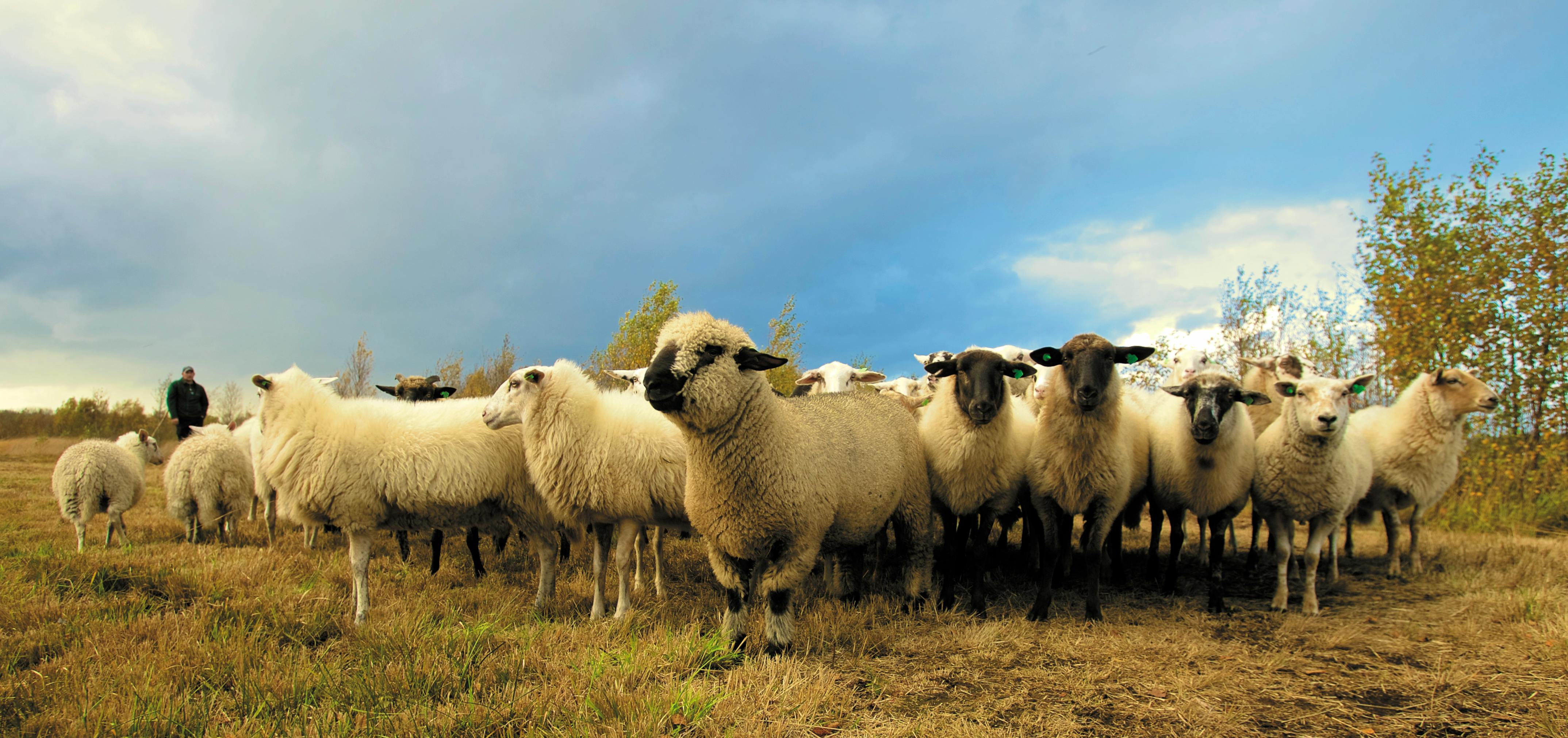
This project aims to help sheep farmers across Ireland keep their flocks healthy and productive with effective methods to control liver fluke infections by gaining a better understanding of triclabendazole resistance in these parasites. Farmers who participate in the study will receive complimentary faecal parasitological and liver fluke faecal egg count reduction testing for their flock, and advice on how to potentially reduce future fluke infections on their farm.
Project Background
Liver fluke (Fasciola hepatica) is one of the most commercially important parasites of sheep and cattle across Europe and the world. Liver fluke infection can lead to widespread losses in production, numerous health issues and death. Currently, liver fluke infections are primarily managed using a variety of flukicidal drugs. Unfortunately, flukes have been gradually becoming more resistant to drug treatment.
Triclabendazole, licensed under various trade names, is one of the most important flukicidal drugs, being the only treatment available to kill the early immature fluke life stage, important in the acute stages of infection. Due to this, triclabendazole has been widely used to control lover fluke infections. However, this widespread use has also led to the evolution of triclabendazole resistance in multiple liver fluke populations, reducing the efficacy of treatment.
Project Aims
The MAP-TCBZR (MAPping TriCleBendaZole Resistance) project is a collaboration of researchers across Europe, led by the University of Liverpool, with the Irish branch of the project based at University College Dublin. The project hopes to identify genetic variants within liver fluke that confer triclabendazole resistance and to gain a better understanding of how liver fluke become resistant, with the aim of maintaining and improving livestock production, as well as serving as a base for future research and policy.
The key aims of the project are to unveil any connections between existing farm management practices and the emergence of triclabendazole resistance, and to identify any resistant fluke populations on our participating farms through faecal egg reduction testing. Any resistant fluke populations found will be genetically analysed to better understand the underlying biological processes that confer flukicide resistance so that fluke infections can continue to be easily controlled in the future. Our project will also examine the impact of liver and rumen fluke infection and treatment on the gut microbiome, the microbes that live in the gastrointestinal tract that are very important for sheep health, and the microbes within fluke eggs themselves to better understand the impact the microbiome and flukes have on each other, further contributing to the development of novel strategies in fluke management.

Methodology of the Project
Fluke Management Survey - Study participants will be asked to complete a fifteen minute survey assessing their current knowledge and practises on liver fluke control, treatment and perception of flukicide resistance in their area. This survey will allow us to better understand the existing practises and conditions that potentially contribute to the development of flukicide resistance, and can be completed online, over the phone or in person during our farm visit.
Triclabendazole Resistance Test - Participants will be invited to have complimentary faecal egg count reduction testing carried out on their flock free of charge to test for fluke and flukicide resistance. Recently voided samples will be collected on site by researchers, followed by triclabendazole dosing and another round of sampling after twenty one days. This will this reveal if your flock has a fluke infection and if treatment was effective. In addition, by comparing results across farms and referencing your survey results, we will understand the impact of different farming and fluke management practices have on the emergence of flukicide resistance.
Genetic Analysis of Resistance - Fluke eggs that were gathered from the faecal samples will be genetically analysed to identify markers associated with flukicide resistance. By comparing the genetics of liver fluke populations that are resistant to triclabendazole with populations that are not resistant, we can identify genetic markers associated with resistance, allowing us to better understand the biological mechanisms that confer resistance to flukicides. These results will be compared to those of the other countries across Europe participating in the MAP-TCBZR project, allowing for a deeper understanding of resistance patterns and spread, as well as fluke management practices across different European farming contexts.
As a participant, you and your nominated veterinary practitioner will receive personalised results on flukicide resistance present on your farm, as well as broader results that can inform you of how to improve your present fluke management strategies. On a wider scale, our findings will be used to contribute to policy recommendations to improve flukicide resistance detection and management across Europe.
Microbiome Analysis - By comparing other microbial species present in the faeces of healthy sheep and those infected with fluke, and those found before and after anthelmintic treatment, and within fluke eggs, we hope to identify microbial shifts and profiles associated with fluke infection and potential anthelminthic resistance.
Who Can Participate in this Study?
If you have a flock of sheep and would like to participate in our study, complete our Google form linked below or contact Professor Grace Mulcahy ((opens in a new window)grace.mulcahy@ucd.ie), Dr James Rooney ((opens in a new window)james.rooney@ucd.ie) or (opens in a new window)tcbzr@ucd.ie to receive an information leaflet, privacy notice and consent form. Following the return of the consent form, a suitable date for a farm visit by one of our researchers will be arranged. Participation is fully voluntary at any point in the study. You can withdraw your consent at your discretion, and all of your data will be removed from our systems.
Why Should I Participate in this Study?
By participating in our research, not only will you receive complimentary general parasitological and FECR testing for your flock and recommendations on how you can minimize and manage fluke infections, you will also be contributing to an international effort in parasitological research, identifying effective liver fluke management strategies and managing emerging anthelmintic resistance, which is only going to become more relevant to farmers as rates of resistance rise.
How Do I Sign Up?
If you have a flock of sheep in Ireland and would like to participate, you can sign up using our google form: (opens in a new window)https://forms.gle/3hQLMpLV5WmmeQYg9