
Should history change the way we think about populism? This is the central question explored by researchers Alan de Bromhead and Kevin Hjortshøj O’Rourke in their paper, which challenges several assumptions shaping today’s debate. Political movements across the spectrum are frequently described as “populist,” but the term has become so loosely applied that it often obscures more than it explains. Drawing on economic history, the research shows that earlier populist movements were quite different from many groups now given that label.
Populism is often defined as a political view that divides society into two groups: “the pure people” and “the corrupt elite.” It argues that politics should reflect the will of the people, as determined by those who present themselves as their true representatives. But de Bromhead and O’Rourke argue that this definition remains too limited and is often misapplied. They note that criticism of elites is common across politics and, on its own, does not amount to populism. The paper argues that the defining feature of populism is anti-pluralism. In this view, populist leaders claim that they alone represent “the people,” while those who disagree are cast as outsiders, illegitimate, or even traitorous. Populism, then, is not simply a style of politics, but a worldview that deliberately narrows who is considered to belong to the nation. With this clearer definition in mind, the paper turns to history to test whether movements labelled as populist in the past fit today’s assumptions about populism, challenging three widely held ideas that shape contemporary debate.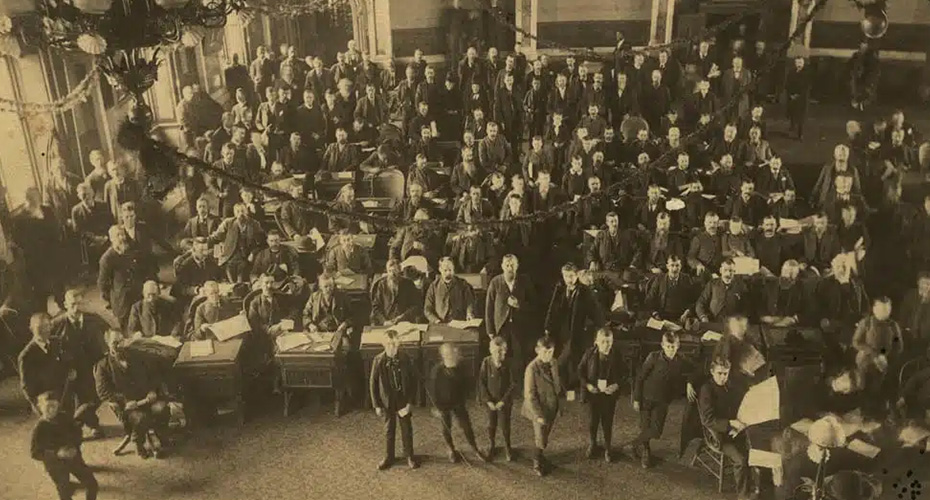
The late nineteenth-century American Populists, from whom the term originates, do not meet the key criteria of what the paper defines as populism. The movement emerged during a severe deflationary squeeze that placed intense pressure on farmers, as falling prices made debts harder to repay and powerful monopolies, such as the railroads, were seen to charge exploitative rates to bring crops to market. While the American Populists strongly opposed elite economic power, aligning with one element of the paper’s definition, they differed in a crucial respect. Rather than narrowing who counted as “the people,” they sought to broaden political participation. Organised through the People’s Party, the movement brought together a wide coalition of farmers, labour organisations, women’s groups and other marginalised communities. Its leaders also advocated reforms designed to deepen democracy, including the secret ballot and the direct election of senators, changes that later became central features of democratic governance.
The paper also challenges a second common misconception that populism is inherently opposed to globalisation. Historical evidence shows that this link is far from consistent. In the late nineteenth and early twentieth centuries, protectionism was often promoted by economic elites seeking to defend their own interests, particularly landowners and industrial producers who benefited from high domestic prices. By contrast, many movements representing workers supported free trade, as cheaper imports reduced living costs and eased economic pressure.
De Bromhead and O’Rourke show that economic positions are shaped by material circumstances rather than a fixed ideology of anti-globalism. This insight remains relevant today. While some workers in wealthier countries may oppose globalisation because it threatens wages or job security, workers in poorer countries often view global integration as a pathway to opportunity and improved living standards. Attitudes to globalisation should not be treated as a defining feature of populism. Instead, they reflect changing material conditions that vary across historical and economic contexts.
The third misconception challenged in the paper is the idea that populists always promote simple or reckless economic policies. In the 1890s, American Populists argued that the gold standard was causing real harm by constricting the money supply and pushing farmers and workers deeper into debt. Most leading economists of the day dismissed these concerns, warning that reforms such as introducing silver into the monetary system would be economically disastrous.
However, later economists, including conservative figures such as Milton Friedman, concluded that the Populists were likely right to be concerned about deflation, and that their proposed reforms may have delivered greater economic stability than the gold standard. By contrast, the refusal of economic elites at the time to question orthodox thinking helped deepen economic crises, culminating in the Great Depression. These failures, in turn, created fertile ground for genuinely dangerous, anti-pluralist and anti-democratic populist movements to emerge.
Taken together, the paper argues that history should make us far more careful in how we use the term populism. By examining past movements, de Bromhead and O’Rourke show that many of the traits now bundled together under the label did not always coincide. The authors also highlight a more uncomfortable lesson. When economic and political elites insist that there is no alternative to policies that are clearly failing, they can undermine trust in democratic institutions and create space for genuinely dangerous, anti-pluralist movements to grow. Historical cases from the interwar period show how expert certainty and policy rigidity helped fuel radicalisation, while periods of successful reform strengthened democracy and weakened demagoguery. The paper ultimately calls for greater precision in language, more openness to policy change, and a recognition that context matters. In an era where “populism” is often used as a catch-all accusation, this research offers a timely reminder that understanding history is essential to interpreting political risks in the present.